
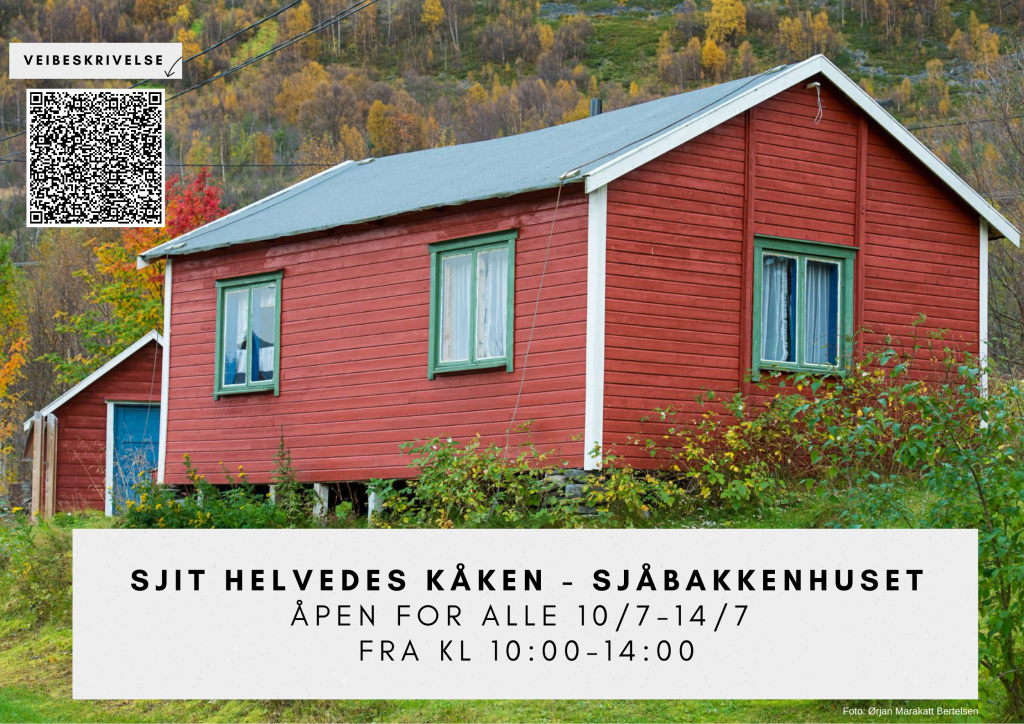

This historic house is known as both Sjåbakkenhuset and Sjit helvedes kåken. Nils Anton Andersen Sjåbakken (1915-1981) and his mother Anne Margrethe Kristine Mikkelsen (1879-1982) lived here. The house was built when they returned home to Manndalen after being evacuated during World War II. Their original home, like all other houses in Manndalen, was burned down by the Germans during the war.
In northern Troms and Finnmark, 11,000 homes were burned or razed to the ground. The controlled repatriation that the authorities had planned had to be cancelled, as people flocked home as soon as they had the opportunity.
There were challenges in distributing materials and labour, and temporary barracks were offered as an emergency solution. The reconstruction was to be administered by construction offices subordinate to the Finnmark Office, and construction offices were established in all municipalities in North Troms.
The Kåfjord building committee made the following statement in 1946: If Kaafjord is not supplied as soon as possible with both barracks for living quarters and outbuildings and new materials for repairing and improving the temporary houses, the Board sees no other way out than to propose that a number of families - particularly in Manndalen - be evacuated. Otherwise, the Board will disclaim all responsibility for the families who are currently homeless or living in earthen pits and shacks that are unsuitable as winter accommodation for humans.
The Sjåbakken family was eventually given a barrack to live in. This was to be a temporary home until they got a proper house.
The Norwegian State Housing Bank was established in 1946. The compensation people received for their war injuries was taken care of by the Housing Bank, and together with the compensation, favourable loans from the bank were to provide the basis for the returnees to build permanent houses themselves with loans from the Housing Bank. Most victims of war injuries did not have the financial means to do this. Kåfjord's municipal council emphasised that with such high property values as the Housing Bank demanded, parts of the population would be forced into a future barrack existence, and the planned reconstruction would come to a halt.
The authorities then demanded payment for the materials they had received in the first phase after returning to their home villages. Those who didn't pay would be deprived of war damage compensation, they threatened. The Sjåbakken house was valued at NOK 2,700, which at the time was equivalent to a year's salary. Naturally, the demands set people's anger boiling. However, Sjåbakken was the only one who protested, and he wrote a letter in righteous anger. He thought the house was far too poor and refused to pay. The temporary homelessness became permanent, and Anton and Ane lived in the shack for the rest of their lives.
The Sjåbakken house is one of the few authentic homes from the time after World War II, and bears witness to a close past that is already being forgotten. Sjåbakken's letter and Anton and Ane's house will keep the memory of evacuation, rebuilding and the post-war period alive here in Manndalen.
Read more about the hellish shack here:
https://nordligefolk.no/sjosamene/historie-religion/sjabakkhuset-eller-sjit-helvedes-kaken/