
In March 2019, we, duo Jorunn Løkvold and mentor Kjellaug Isaksen, from the Centre for Northern Peoples, along with interpreter and local guide Nadja Smelror, travelled to the Kola Peninsula on a study trip. The aim of the trip was to visit the Sámi population, lopary how they are referred to in Russian, to get to know people better, duodji traditions, Sámi art and cultural expressions, and their Sámi history.
We wanted to gain insight into how they work with duodji, material acquisition, material processing and uses, their rich Sámi ornamentation, and how we can achieve further collaboration. We were also interested in finding out if tin thread was used as decoration in South Sámi duodji traditions.
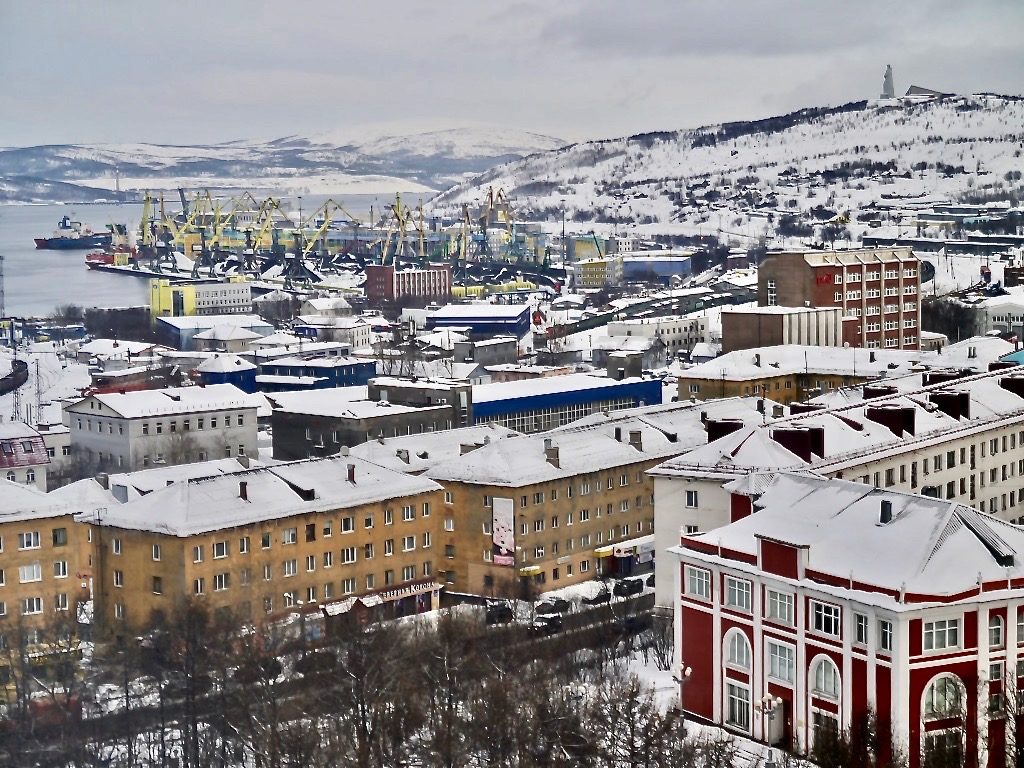
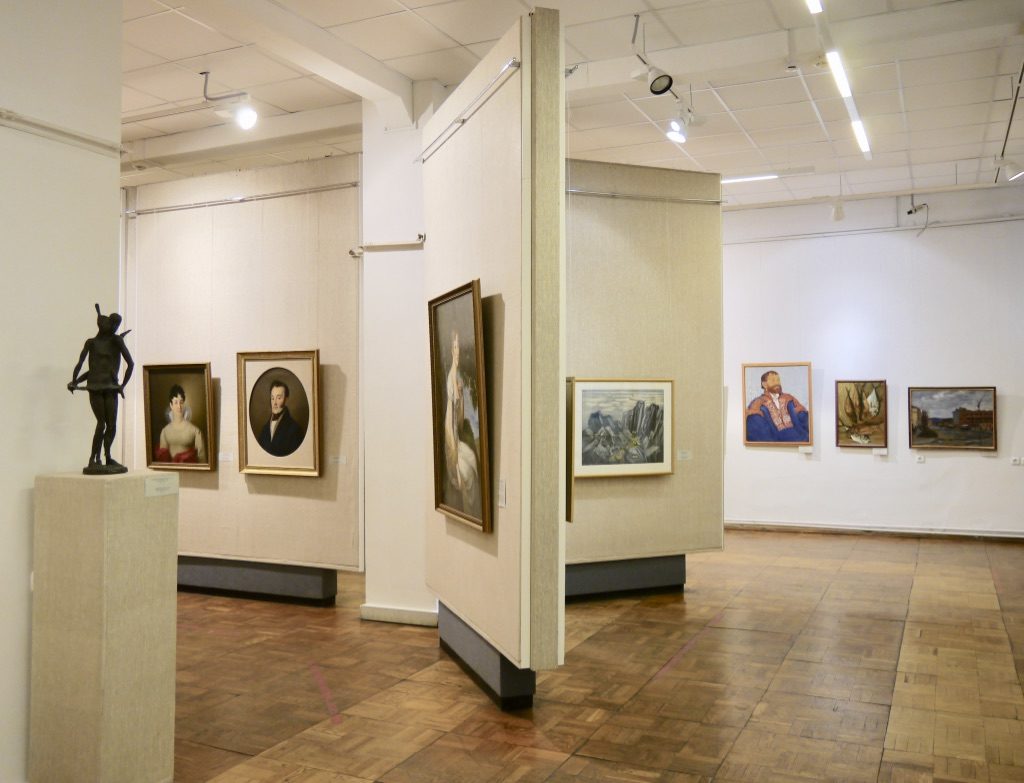
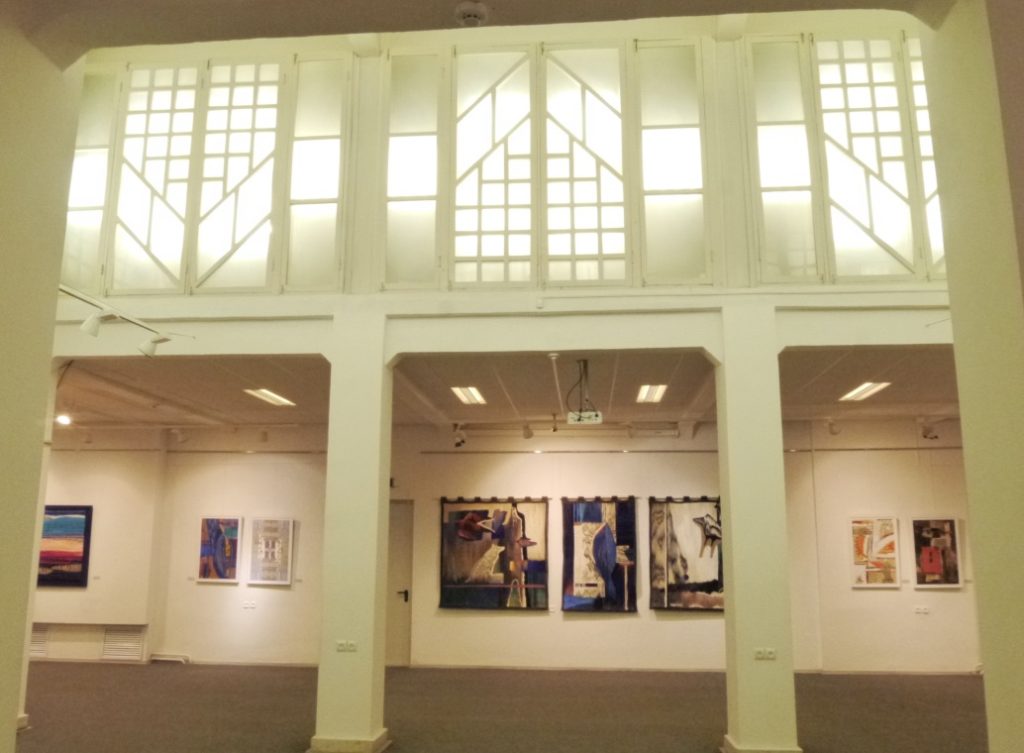
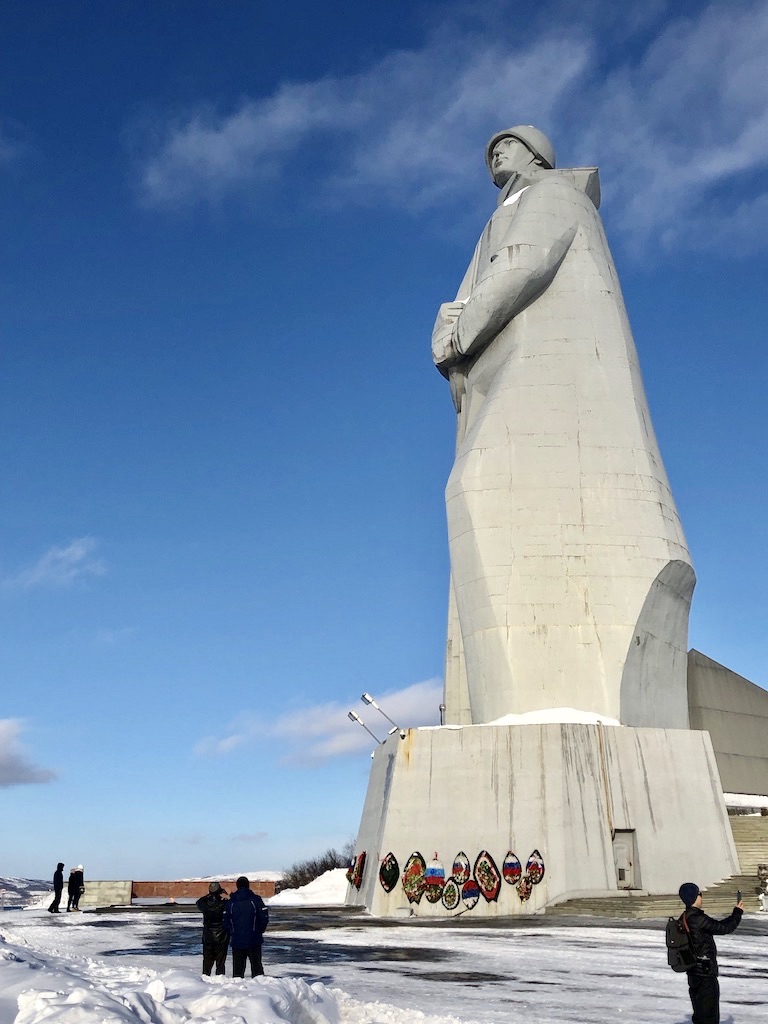
The trip went to Lujavre/Lovozero. The place is located in the middle of the Kola Peninsula and is the administrative centre for the Sami indigenous people of Kola. We started the journey in Murmansk. The plan was to visit the Murmansk Regional Museum, a traditional cultural and natural history museum that tells the story of the area's history, nature and culture, but it was closed for renovation. We visited the Murmansk Art Museum, where the collections represent the development and most typical trends in Russian art in the north from 1960 to 1990. After the visit to the art museum, we took a tour around Murmansk city and visited the «Alyosha« monument which towers over the city. This is an over 30-metre-high memorial to those who fell in ”The Great Patriotic War” (World War II).
Loparskaja
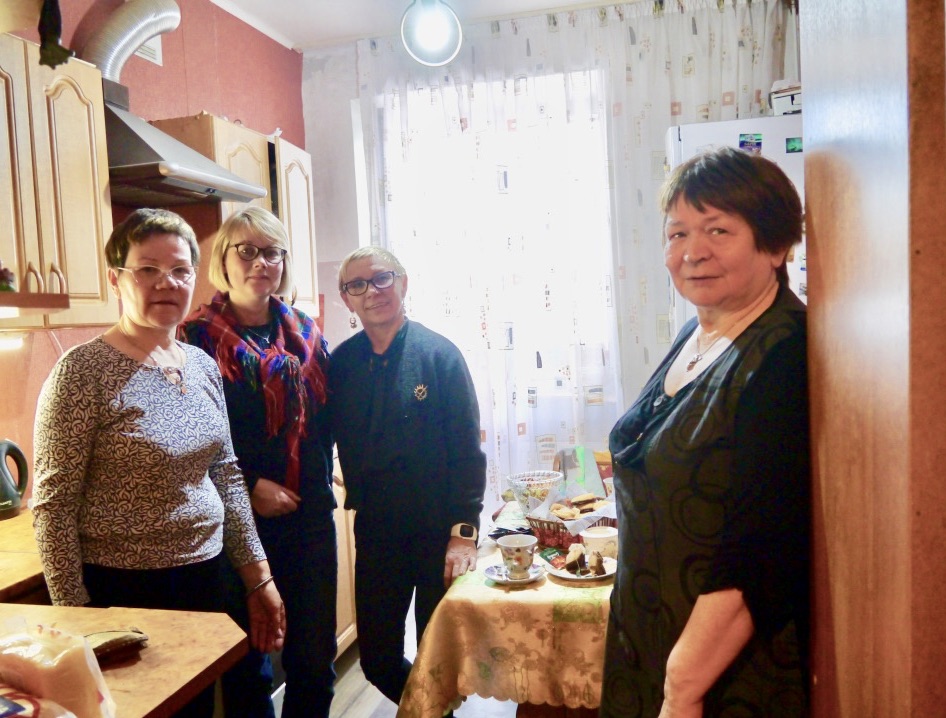
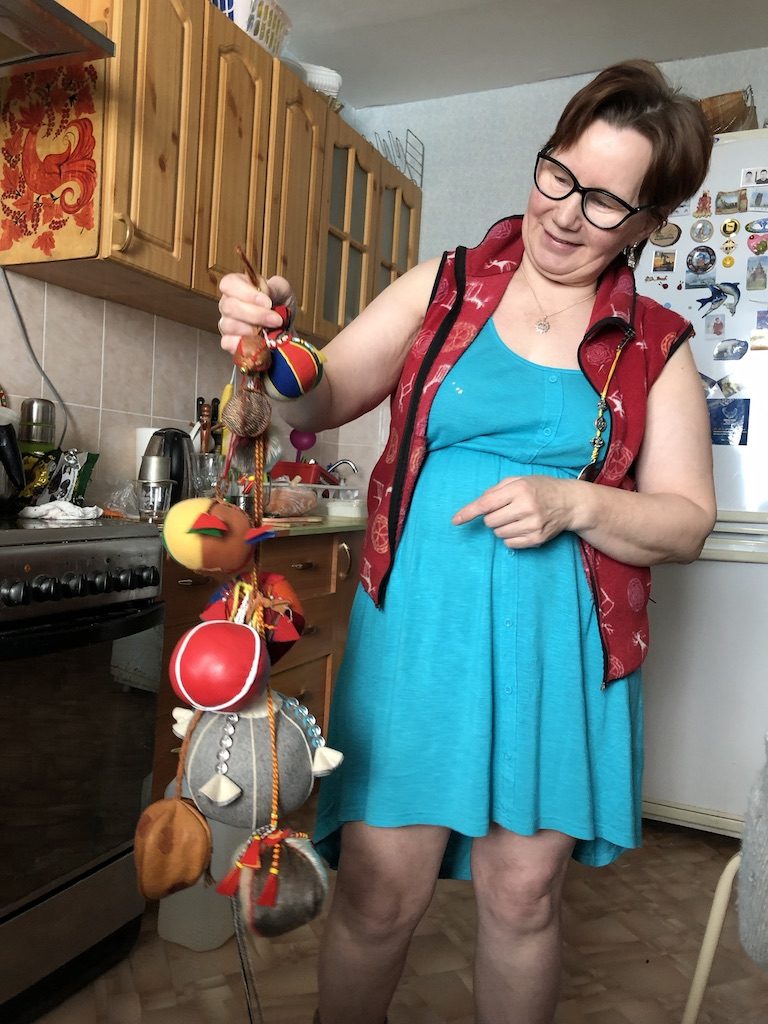
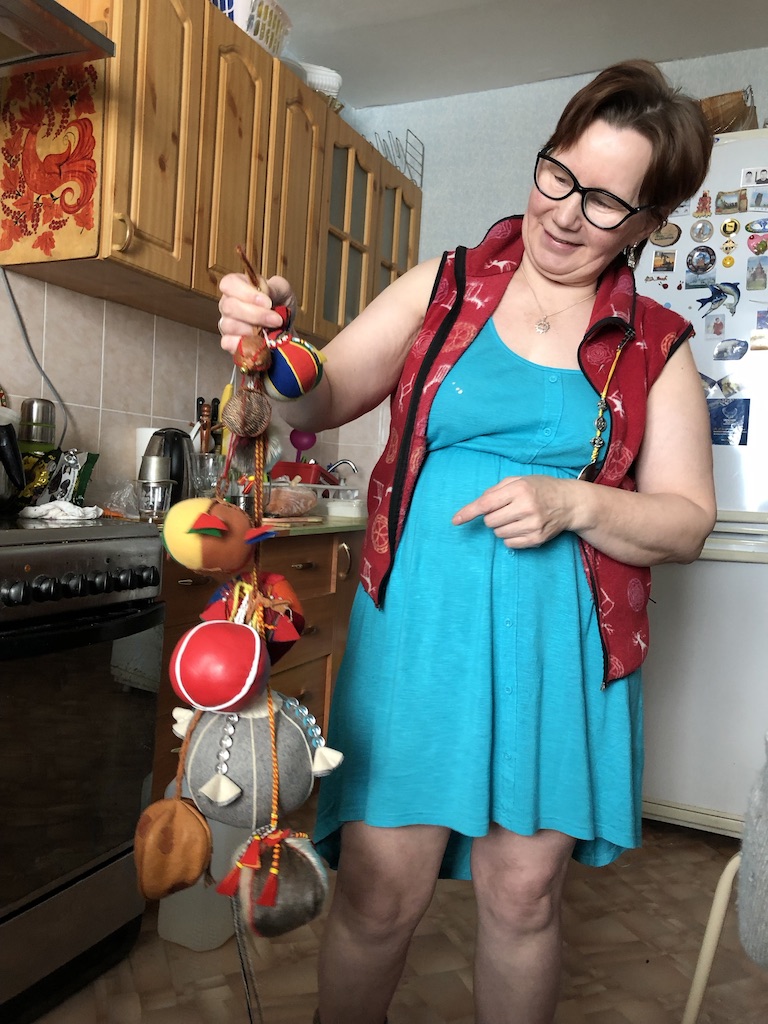
On a trip from Murmansk to Lujavre, we stopped by the village of Loparskaja; these two places have also been referred to as the «Sami villages» on the Kola Peninsula. Here we met two skilled duodji practitioners, Lidia Bolsjonova and her sister Lena. They gave us a good introduction to how they work with duodji, a practice that is of great importance to the local Sami population, both economically and for maintaining their culture. Reindeer herding represents a traditional Sami way of life for the Sami people on the Kola Peninsula. This is evident in their work on recreating traditional Sami artistic and cultural expressions and clothing traditions that have been lost.
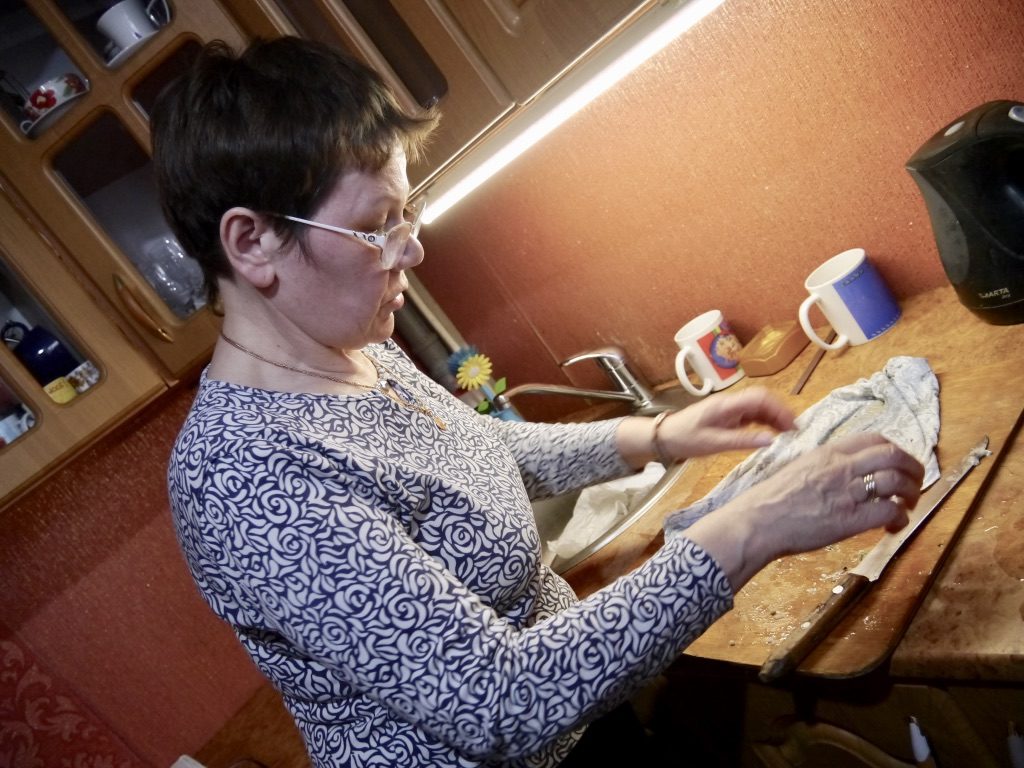
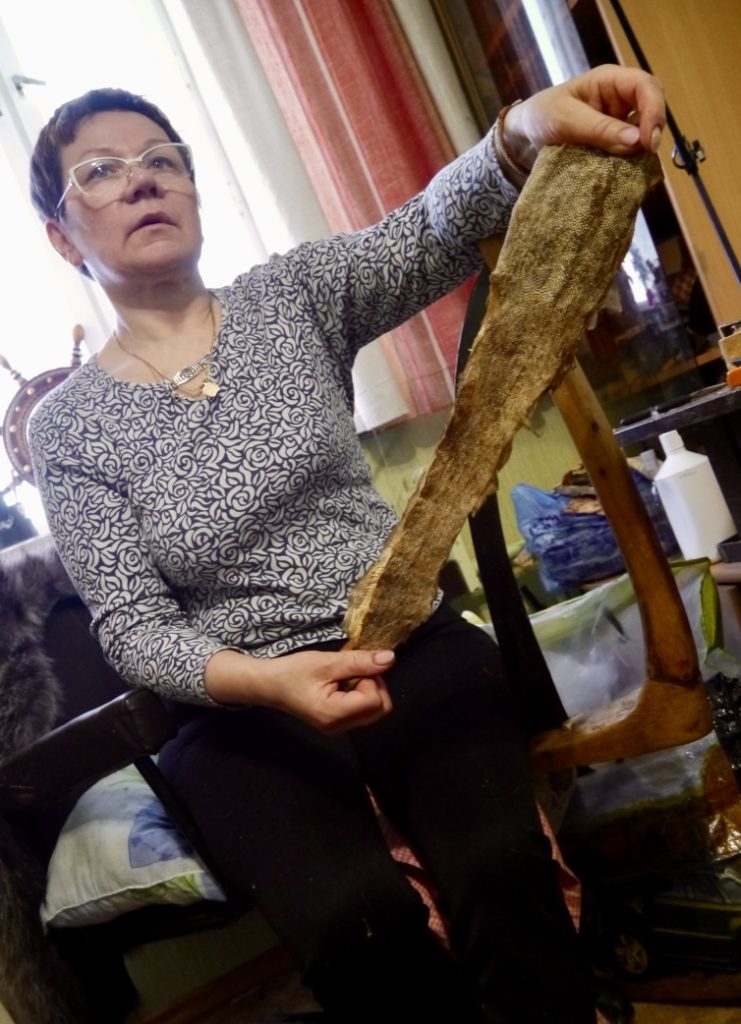
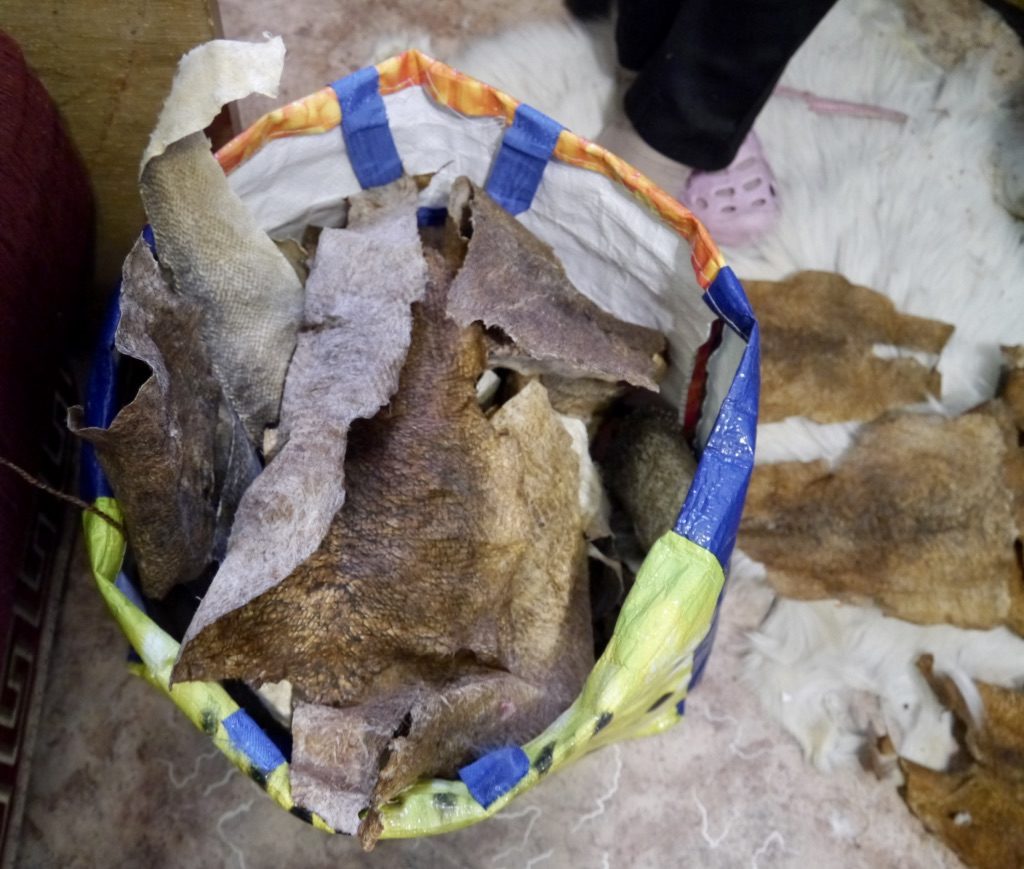
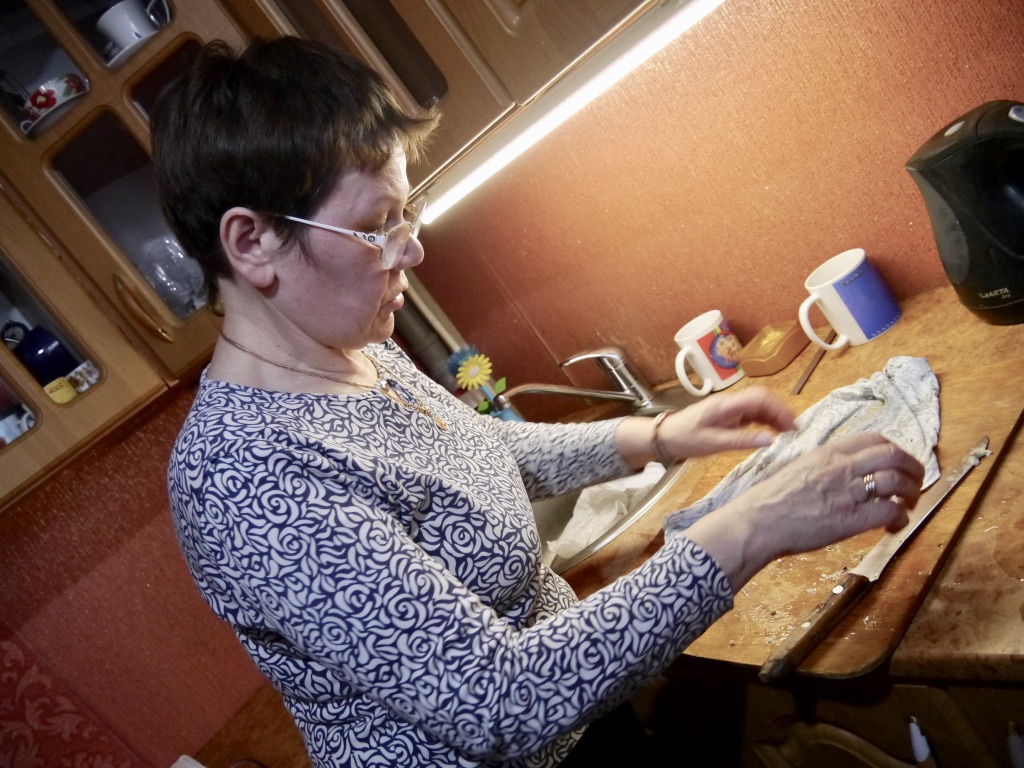
Lidia and Lena also gave us a good explanation about the treatment and tanning of fish skin. Skins from different types of fish, such as pike, burbot and salmon, are processed in a traditional way. We first learned how the skin is carefully flayed from the fish, so that the entire skin is preserved. Afterwards, the skin is washed thoroughly and tanned with bark water boiled from willow or osier, before it is rubbed and stretched dry.
Being able to enter Lidia's workshop and see both newer and older traditional duodji objects, listen to her and her sister Lena's stories, and have conversations about duodji, provided us with a lot of information, and their commitment inspired us to continue our own duodji work.
Lujavre
A large part of Russia's Sámi population lives in Lujavre/Lovozero, sometimes called the «capital of the Sámi» in Russia. Lujavre was originally a Sámi winter settlement, an area where reindeer herders stayed during that season. The place was not a permanent dwelling, but during the Soviet era, the Sámi were forcibly relocated to larger settlements, including Lujavre.
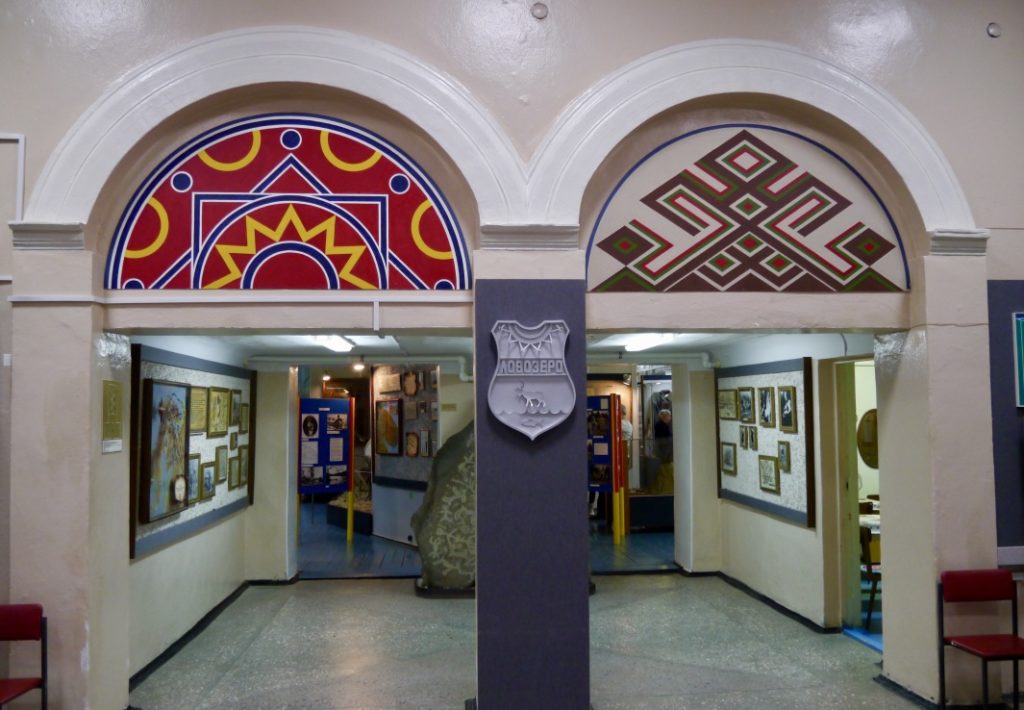
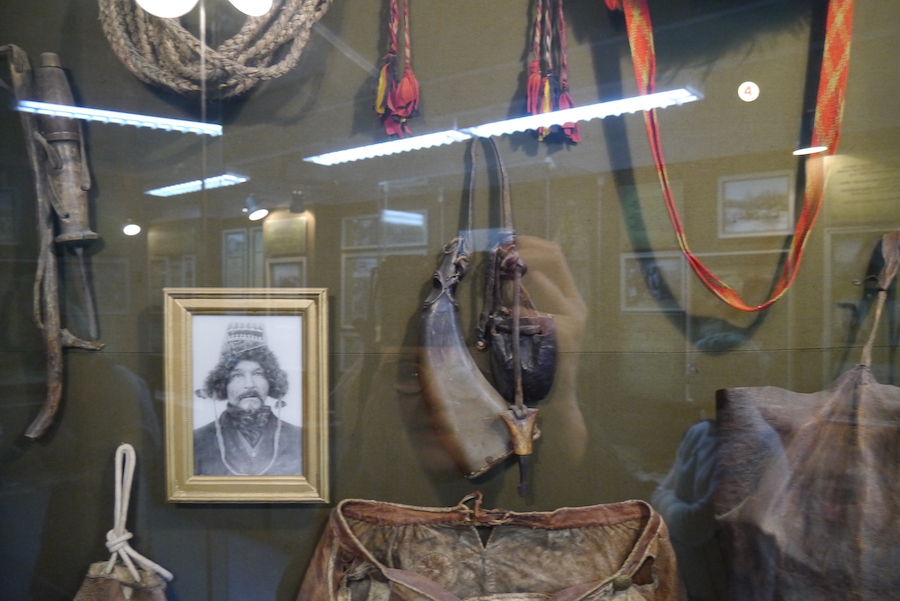
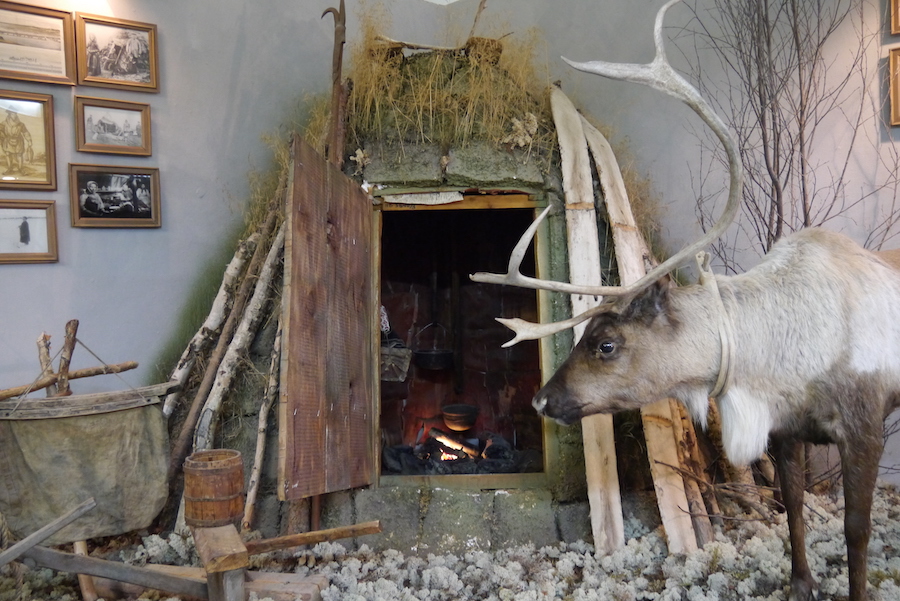
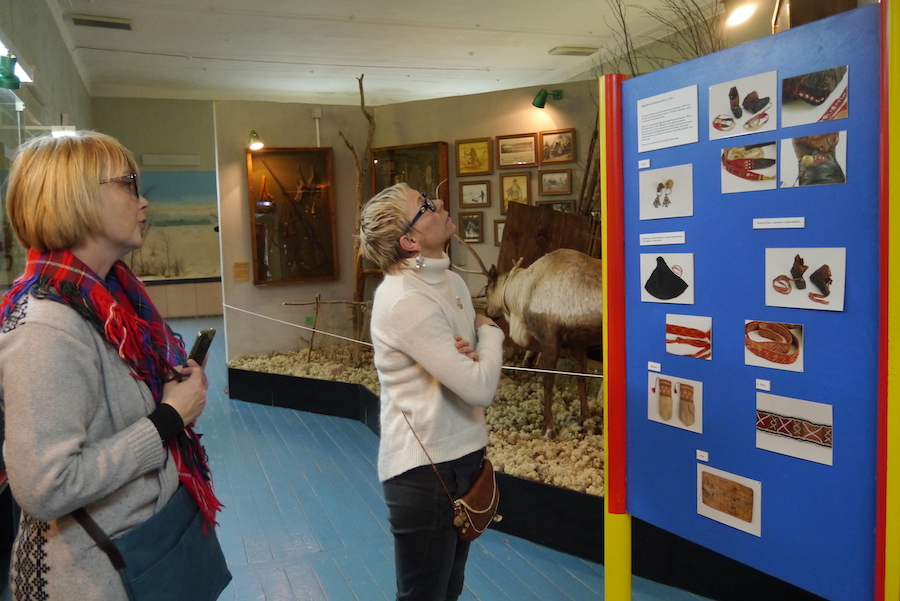
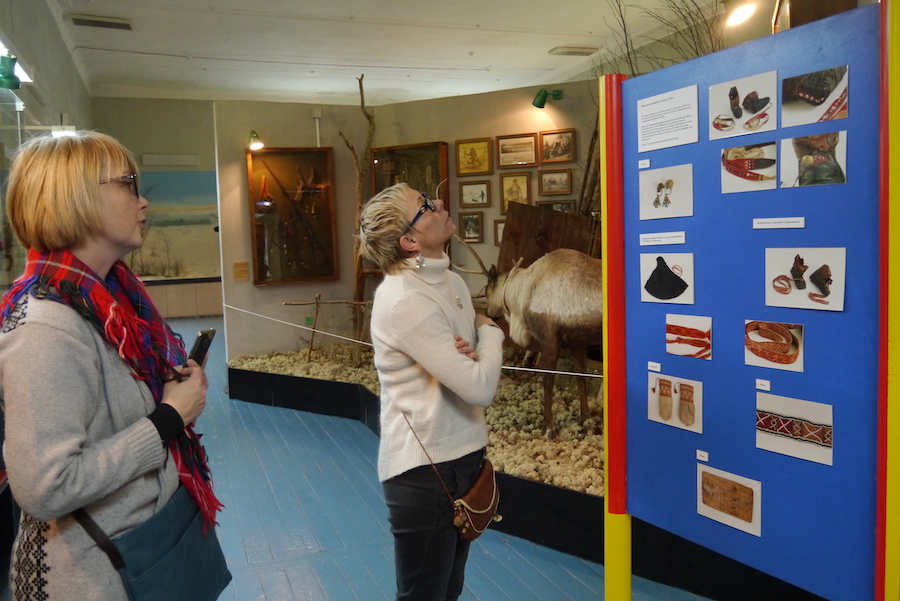
The Lujavre/Lovozero Museum tells the story of the Kola Sámi people's history and development, culture and life from various eras and periods, up to the present day. The exhibitions showcase extensive archaeological finds from several time periods, and ethnographic displays featuring everyday objects, models of older dwellings, clothing traditions, duodji, and art.
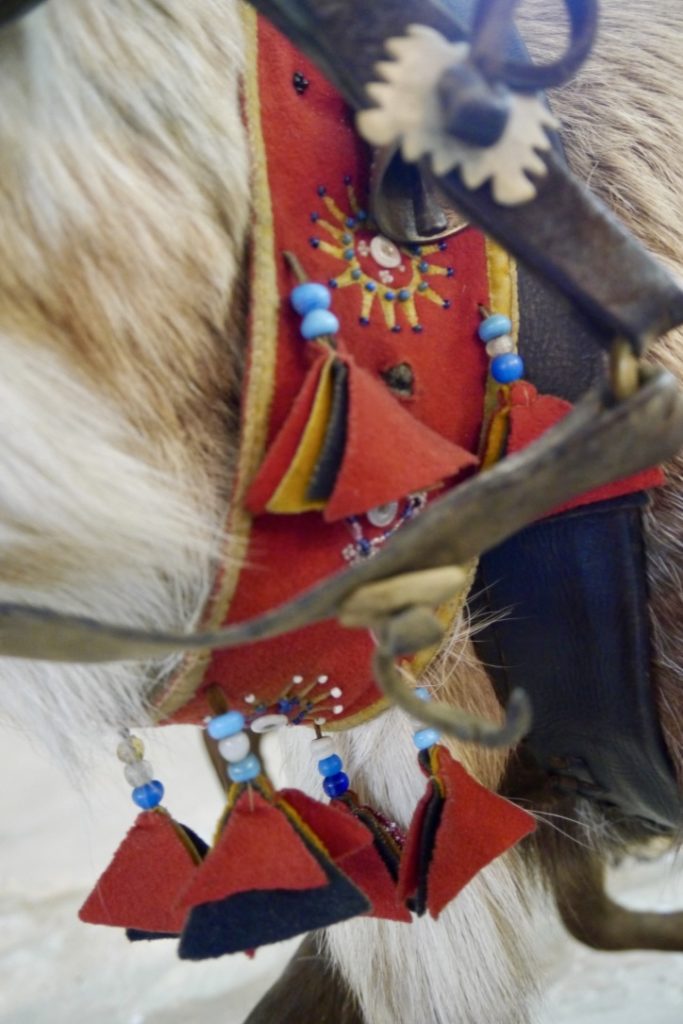
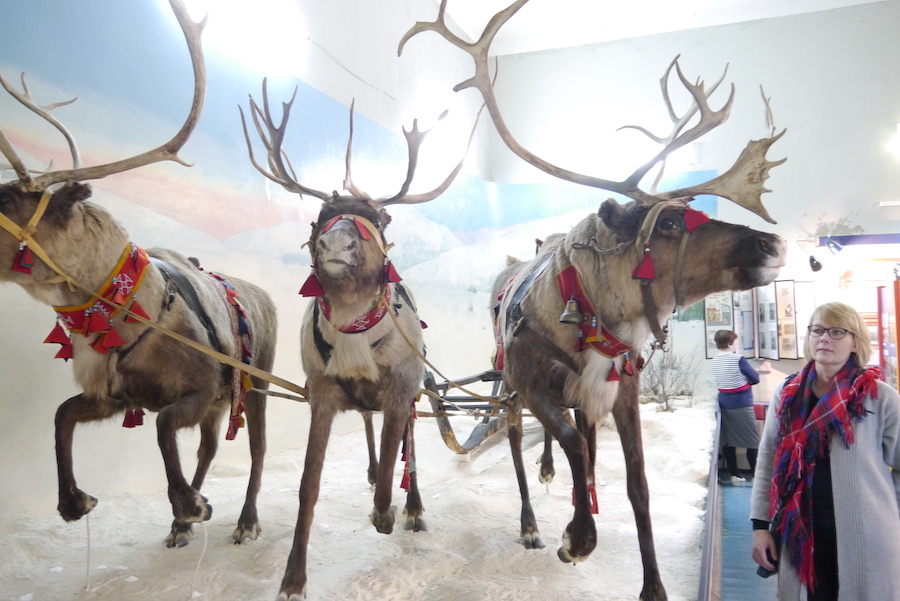
Photographs, documents, artefacts, models of dwelling types and dioramas with reindeer in traditional, richly decorated harnesses with beadwork, provide a traditional and educational introduction to the historical development of the Sámi people and their cultural life.
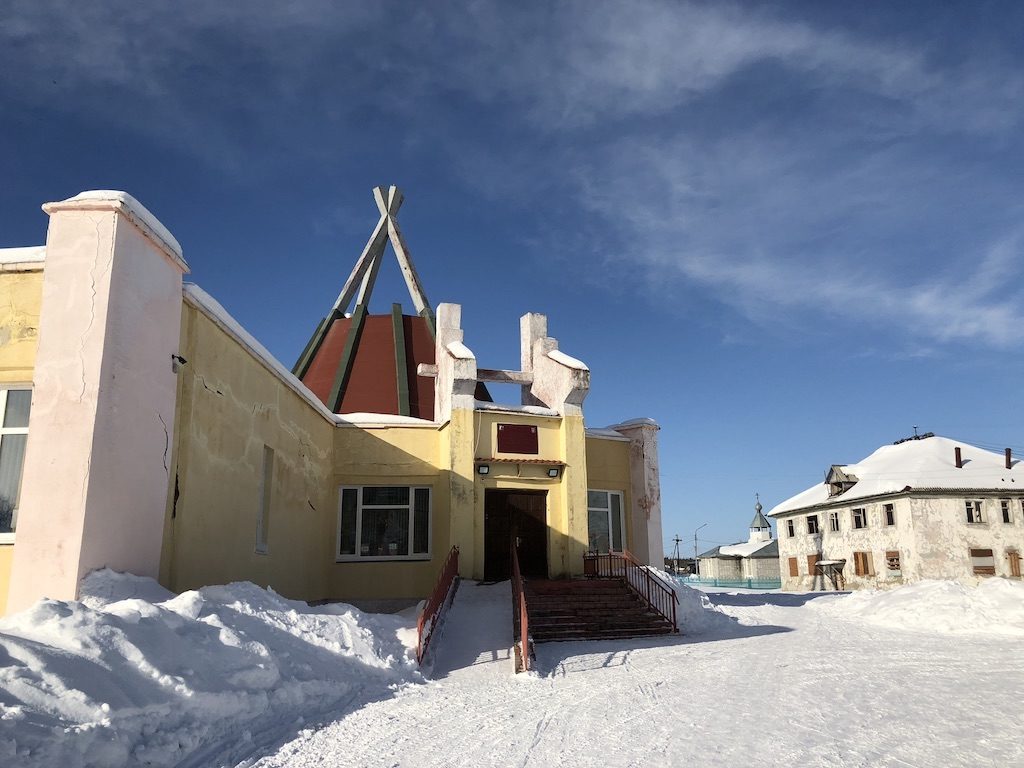
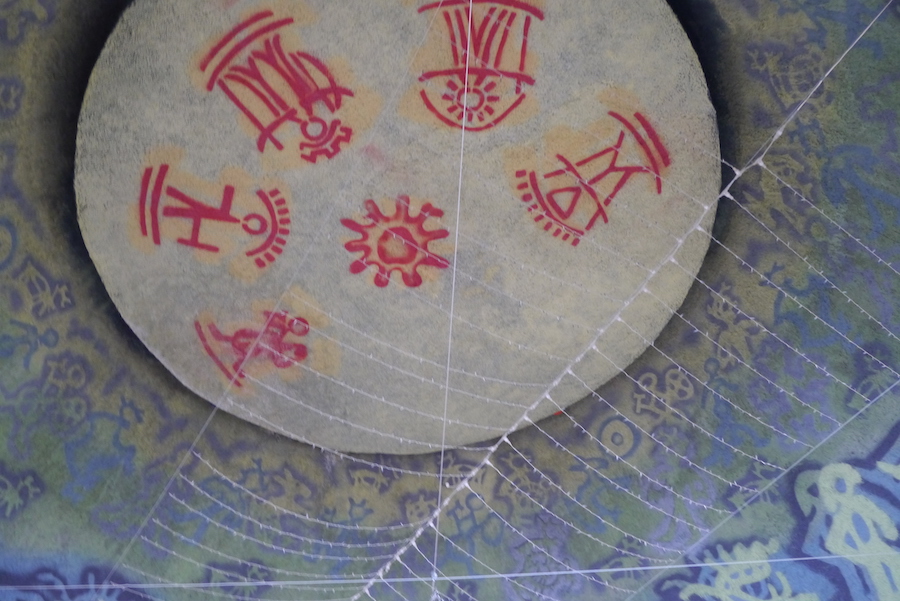
The national cultural centre in Lujavre/Lovozero is a building with a roof in the shape of a lavvu - construction, which is decorated inside with symbols from Sami mythology.
The National Cultural Centre is for all the town's residents, from different ethnic groups, and it hosts events such as concerts and dance and music performances. Inside the cultural centre's hall, there are interesting decorations, ornamented reindeer antlers sewn up in a large format.
Nordic Festival
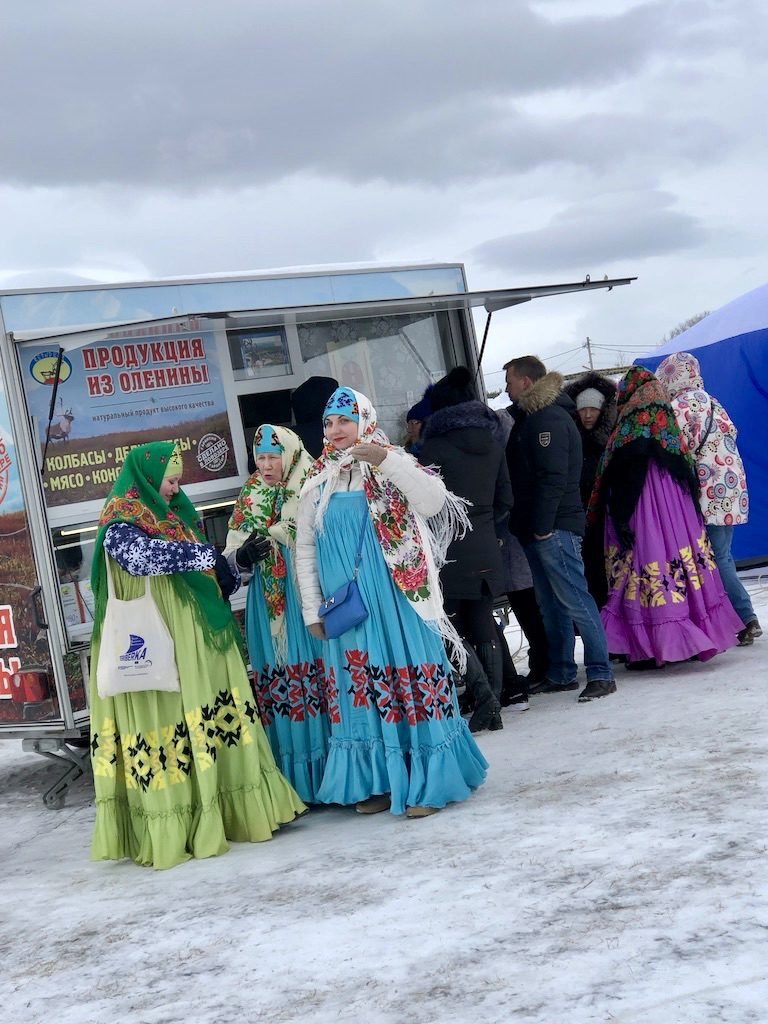
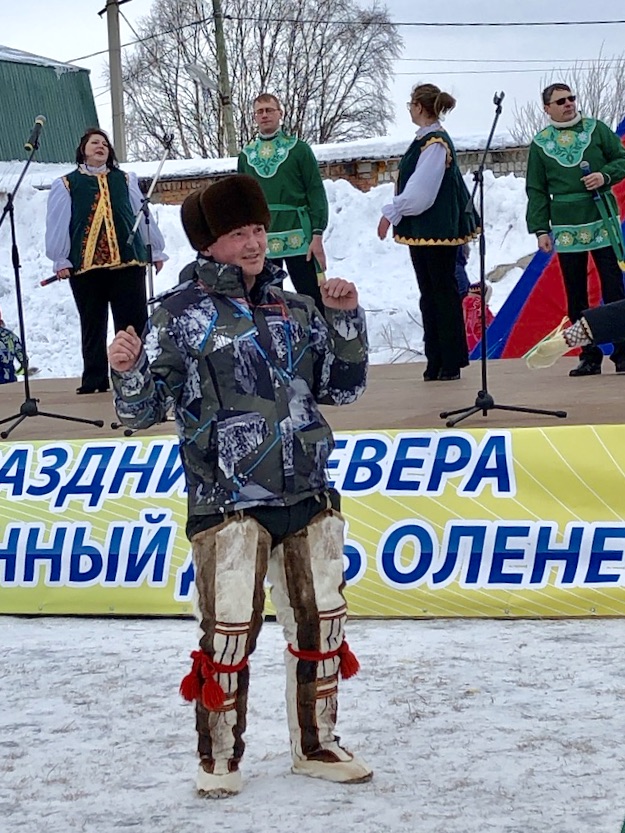
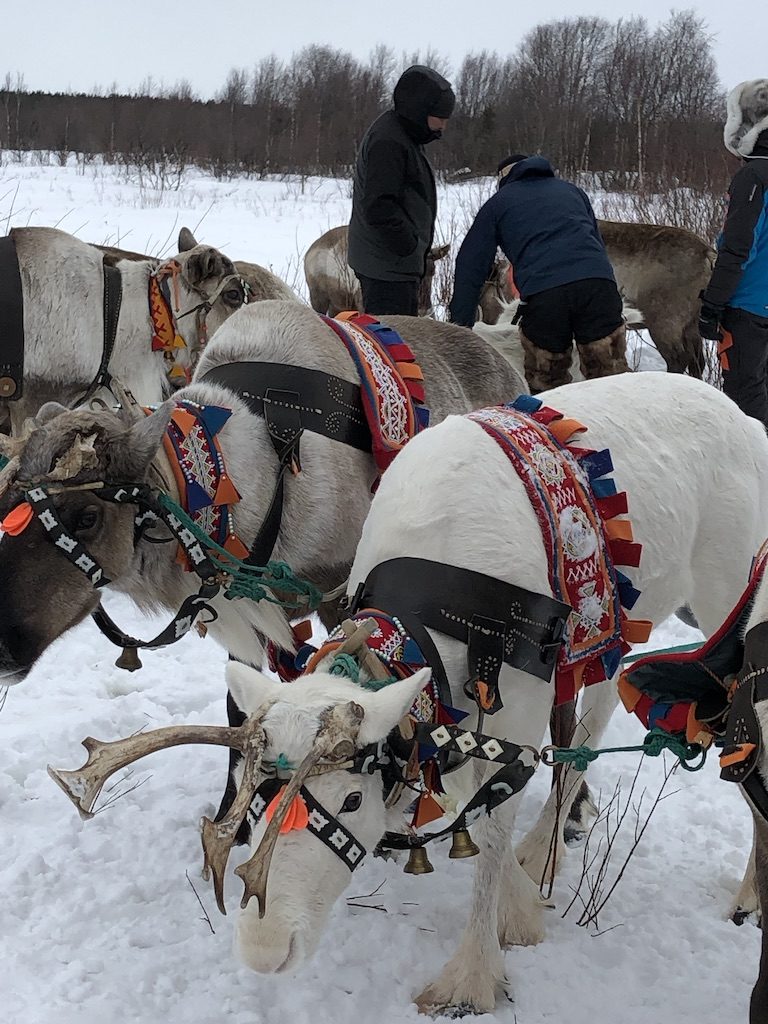
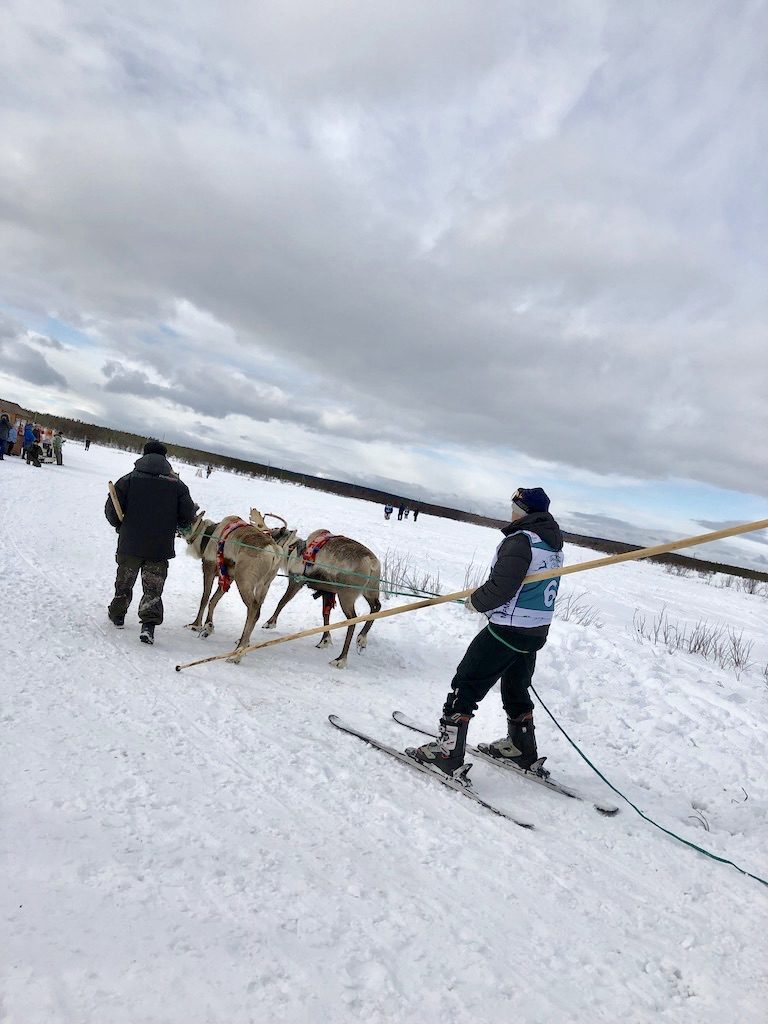
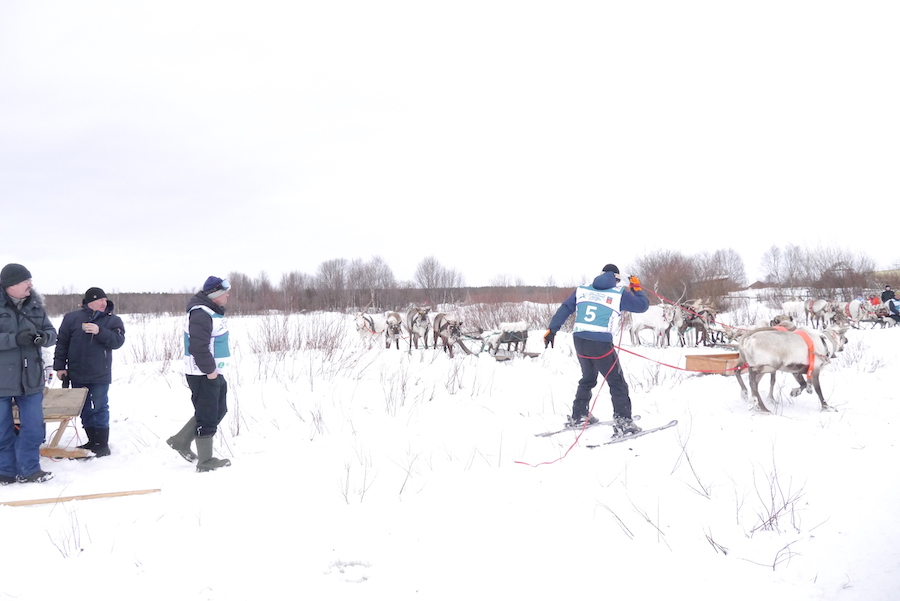
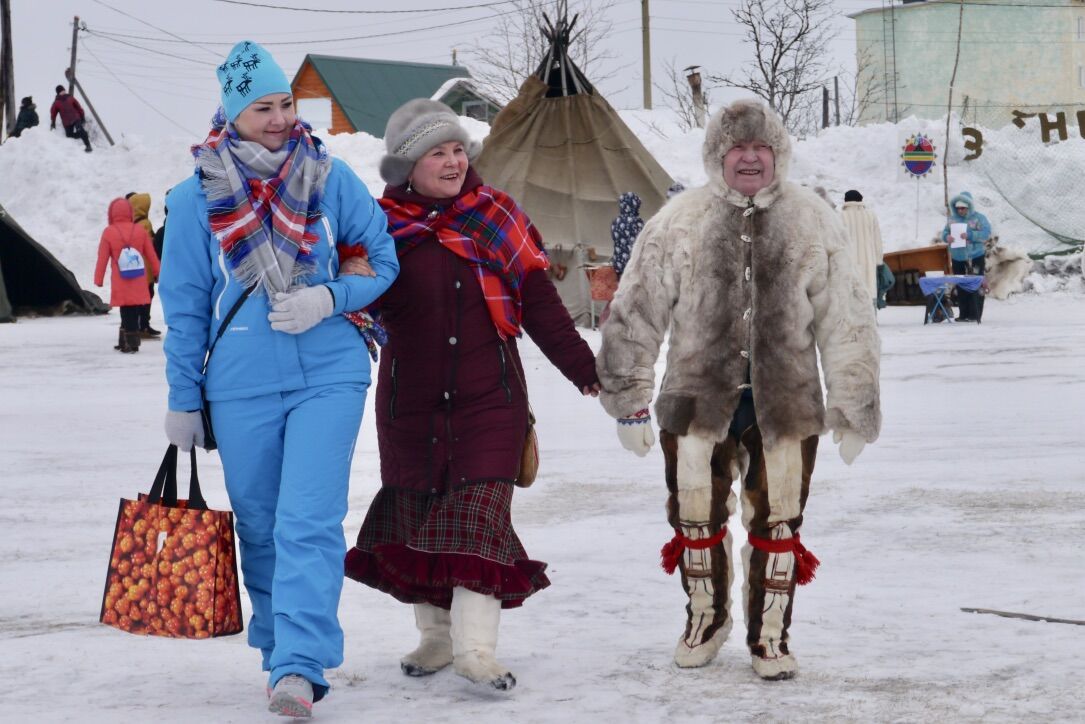
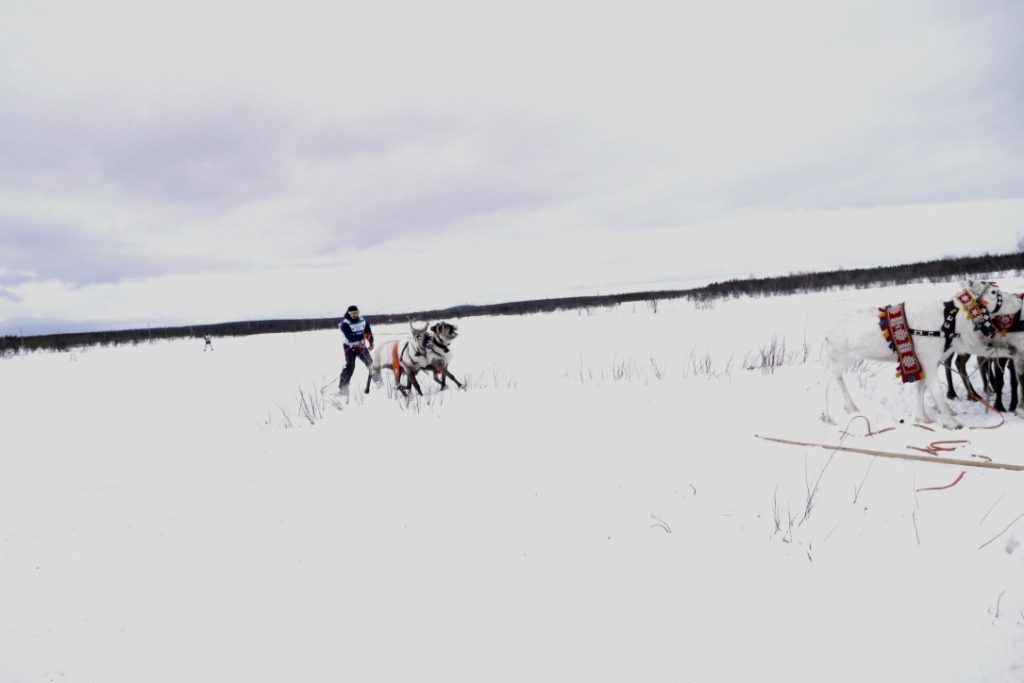
During our stay in Lujavre, we had the chance to experience a large gathering of people at the traditional, annual winter festival, Nordfestivalen. The festival spans several days, with a regional final in Lujavre and the ultimate final for the reindeer racers in Murmansk. Nordfestivalen/the winter festival was established by the state authorities in the Soviet Union in the 1930s, as part of collectivisation. It was called a tribute to the reindeer herder, and through competitions, the skill in working with reindeer was to be showcased. The competitive reindeer racing is the main highlight to this day. The reindeer racers arrived with their reindeer and sledges, and the racing reindeer were decorated with traditional, richly decorated and colourful harnesses. For us, it was an experience to see skilled reindeer racers who raced one by one at high speed out of the arena, and returned in full drive.
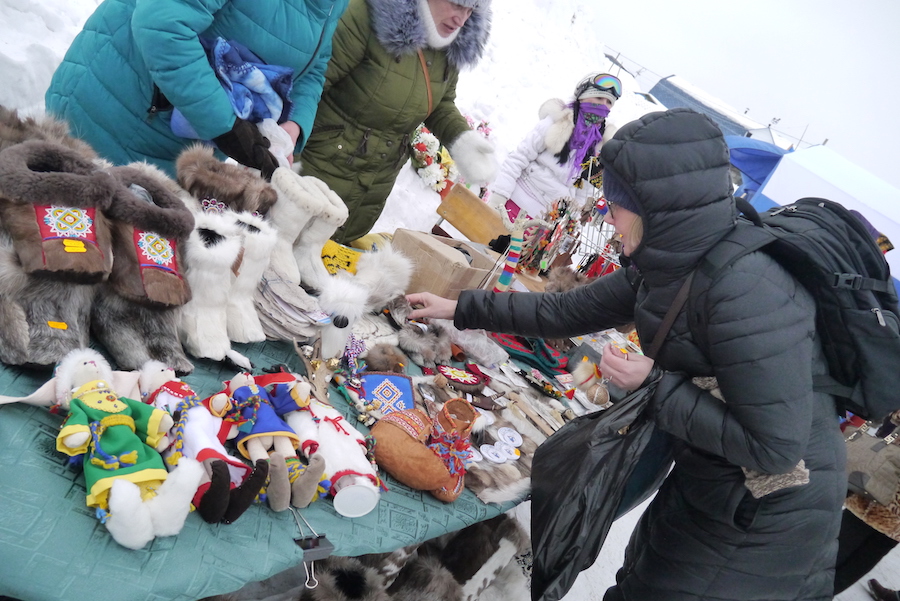
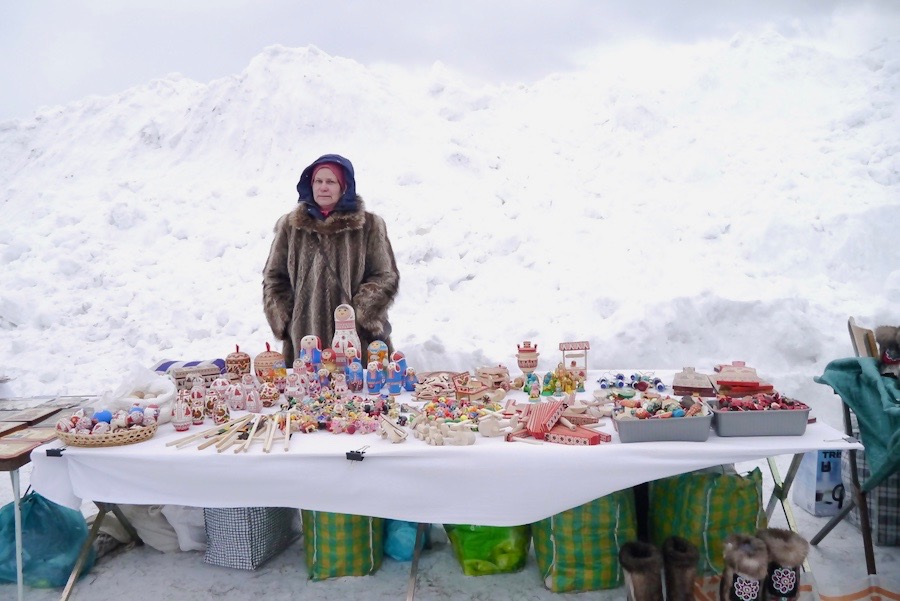
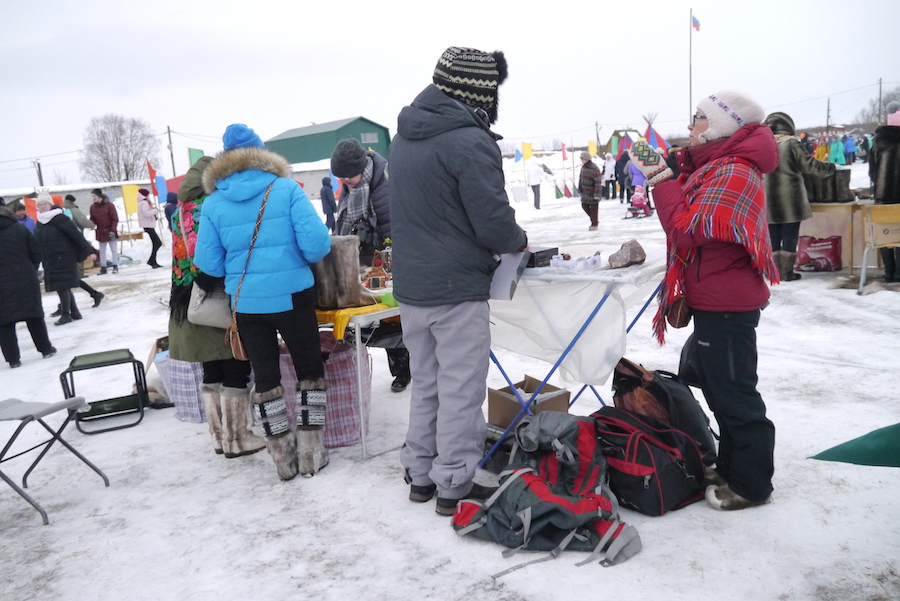
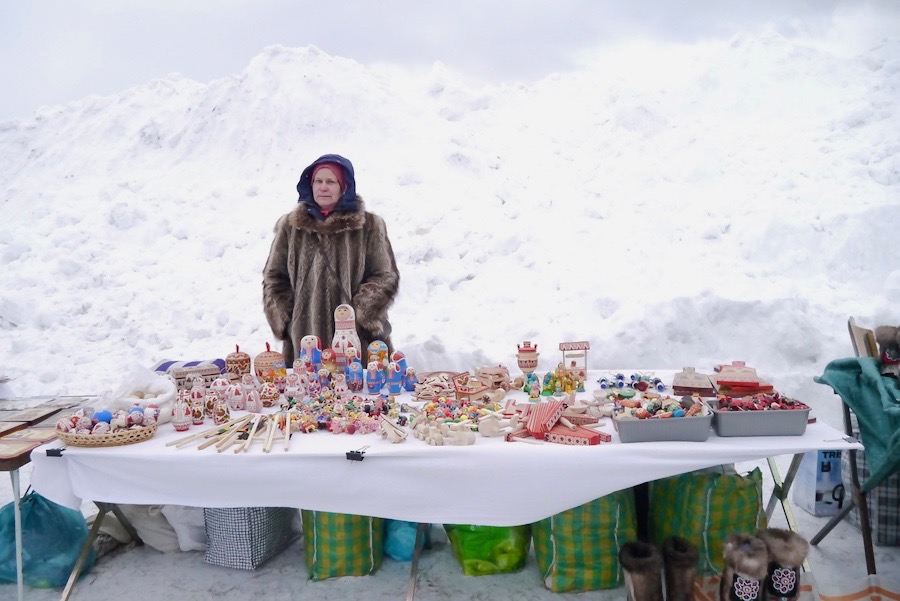
At the winter festival, there was a large outdoor market, with the sale of handicrafts, food and other traditional and newer items from different ethnic groups on the Kola Peninsula. A stage was set up where we experienced both traditional and modern forms of expression and performances by various musicians and dance groups. Visitors to the festival also had the opportunity to participate in sports competitions such as lasso throwing, among others.
Art school I love you
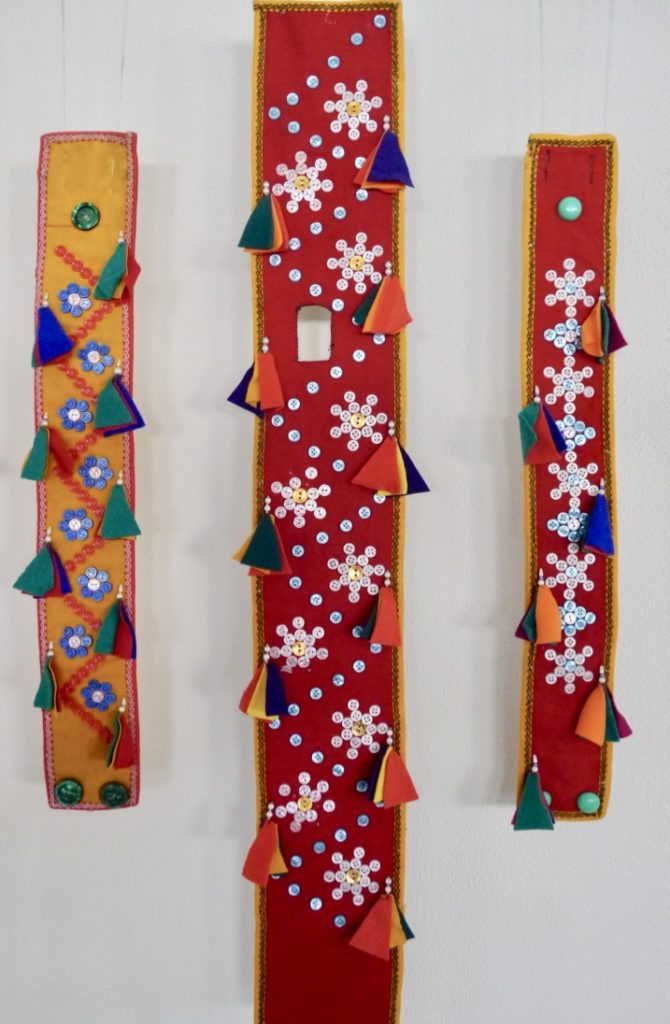
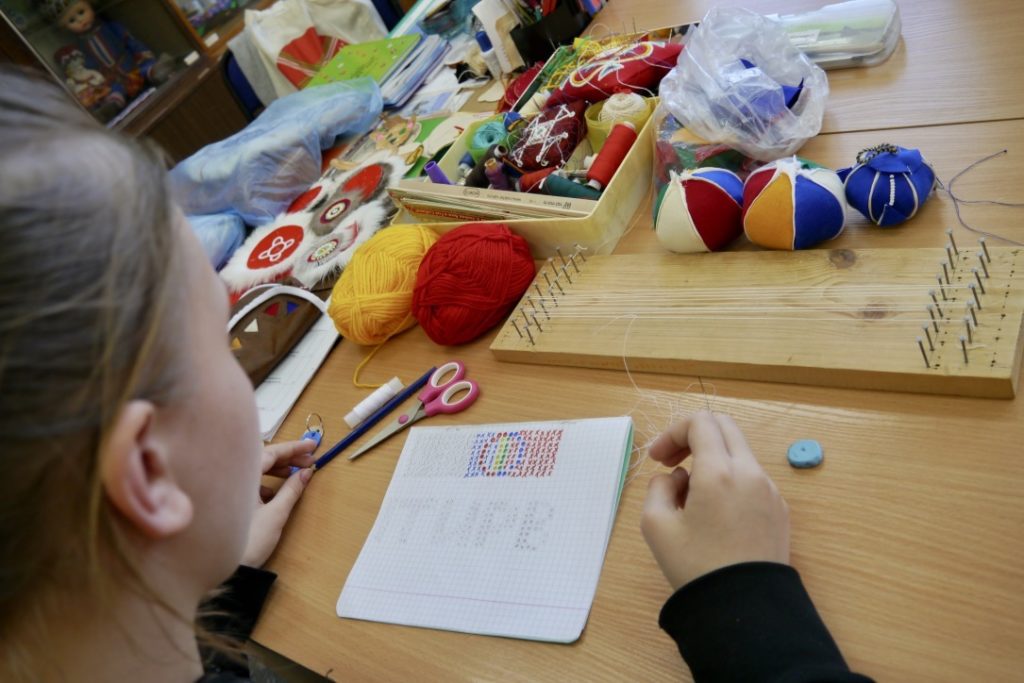
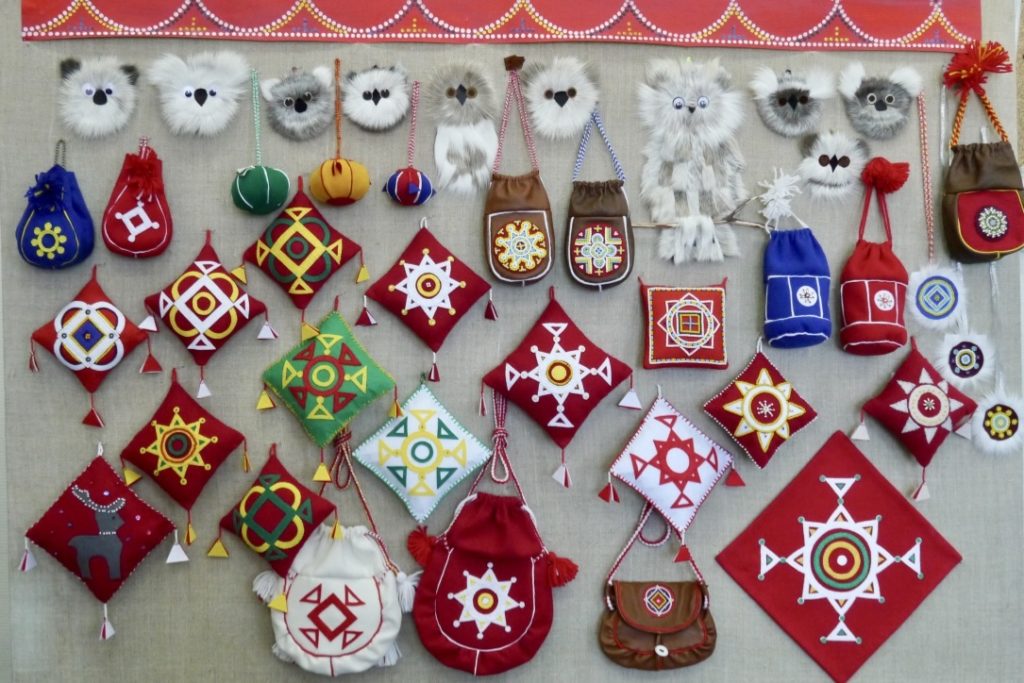
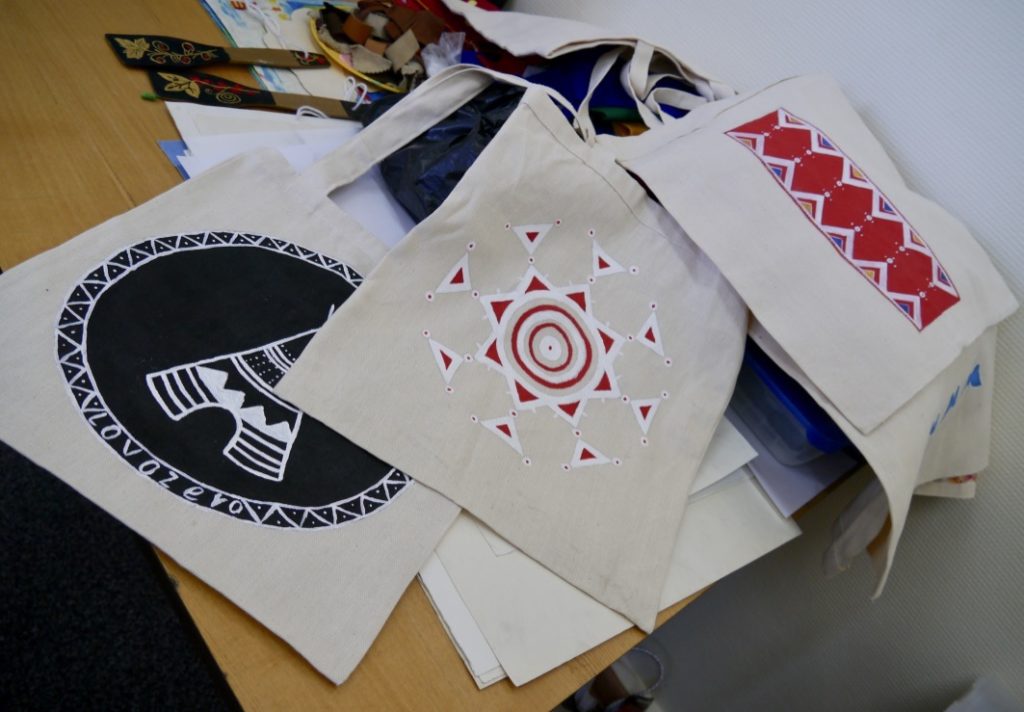
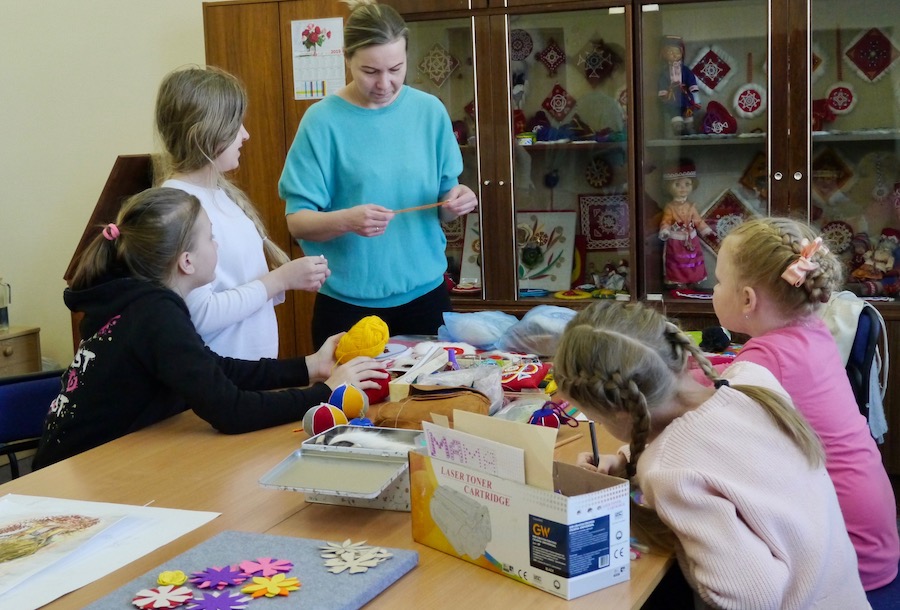
The art school for children, aged 6-14, in Lujavre offers classes in music, painting, and traditional Sami duodji, taught by professional, skilled instructors. The students and their teacher, Anna Sakmarkina, in the duodji class gave us a warm welcome and spoke about their work. Anna explained how they incorporate traditional and more modern techniques, materials, and Sami ornamentation in various ways. We were impressed by the high standard of tuition and the beautiful duodji creations produced by these talented children.
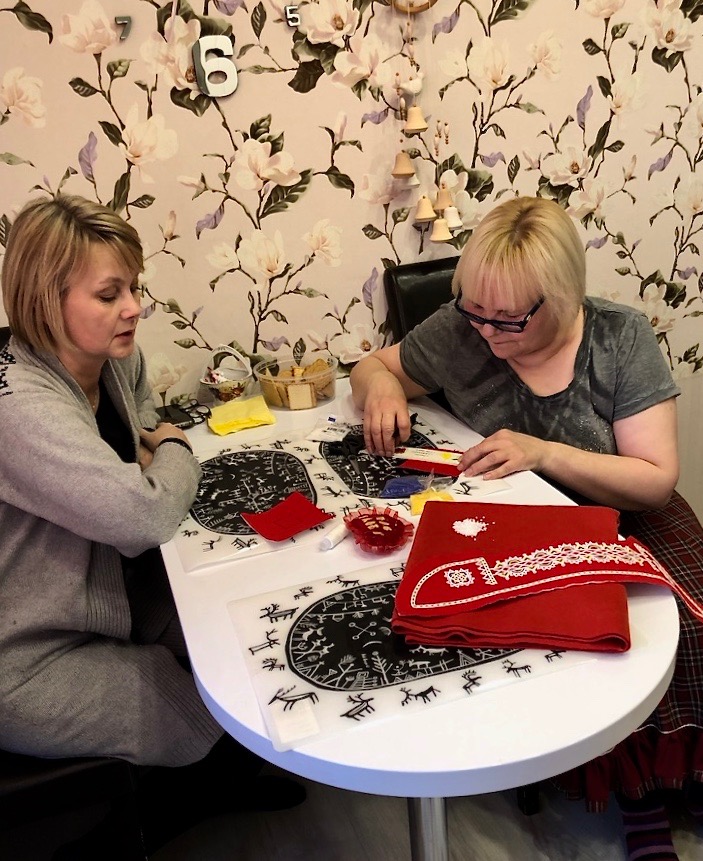
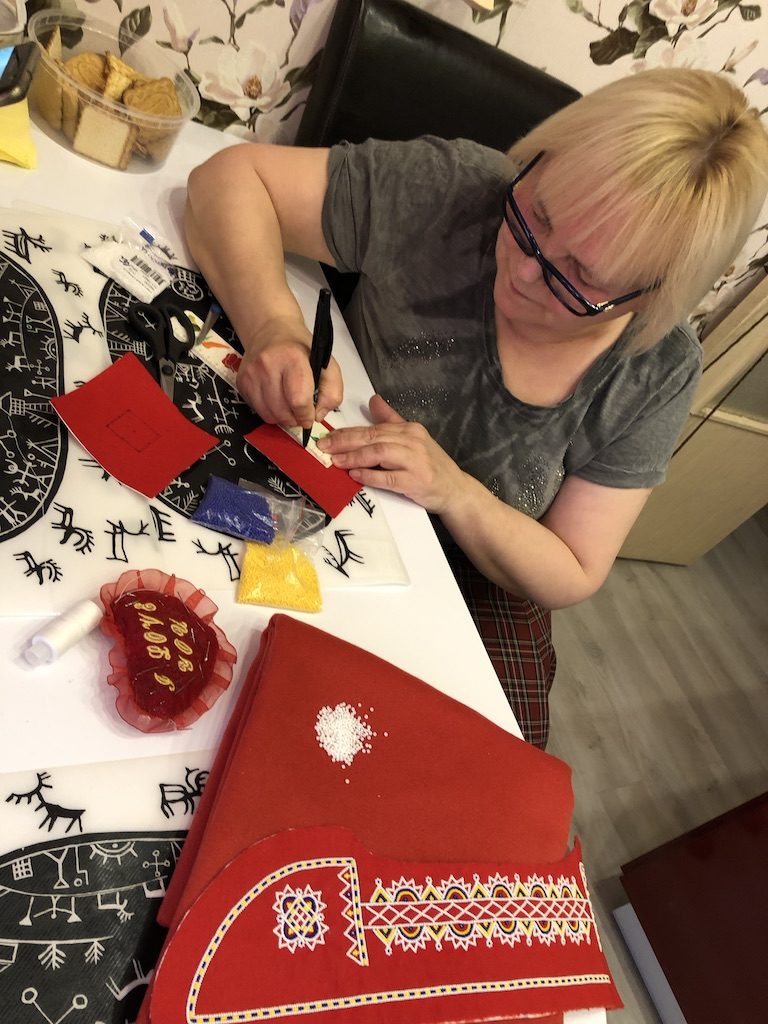
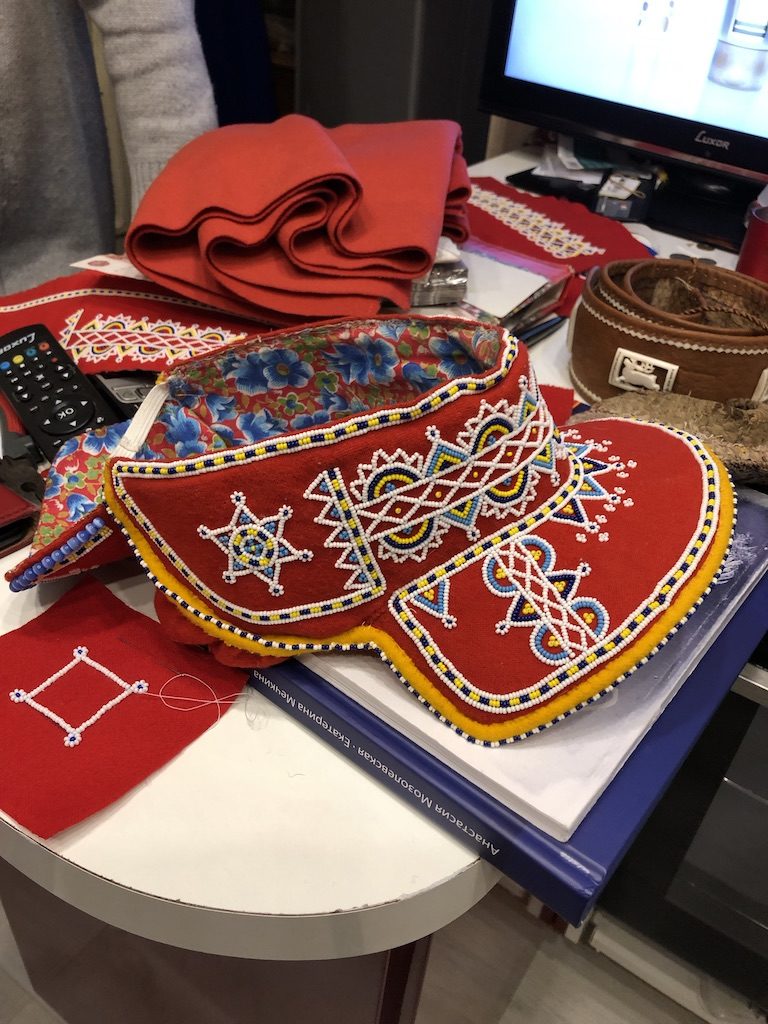
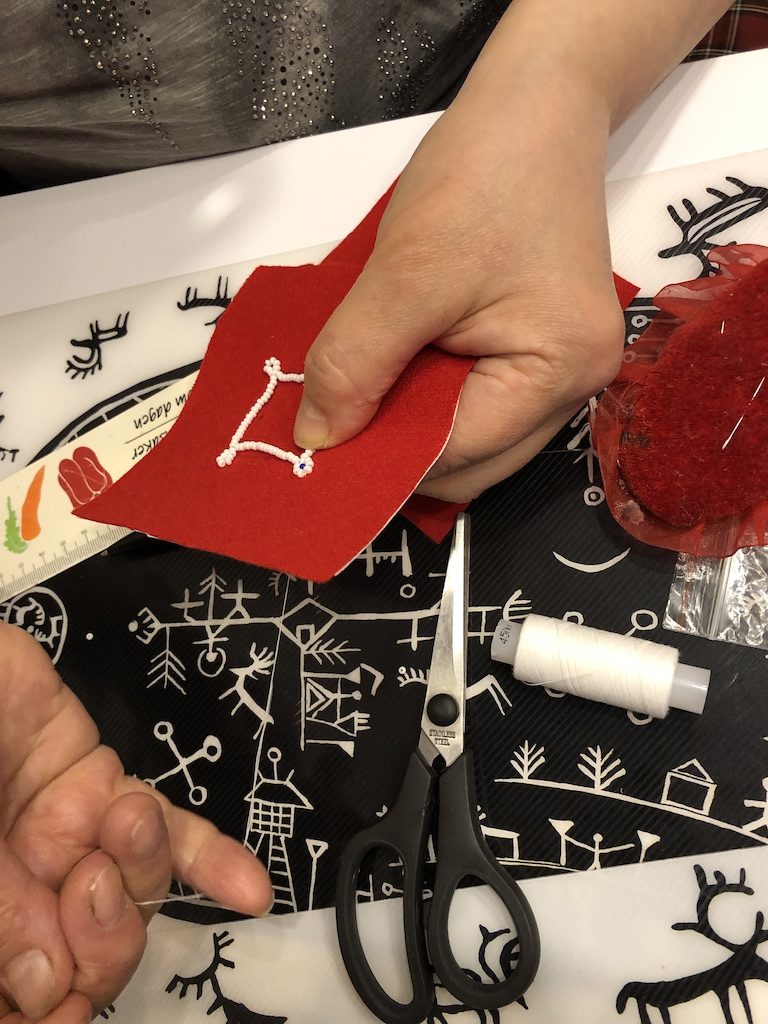
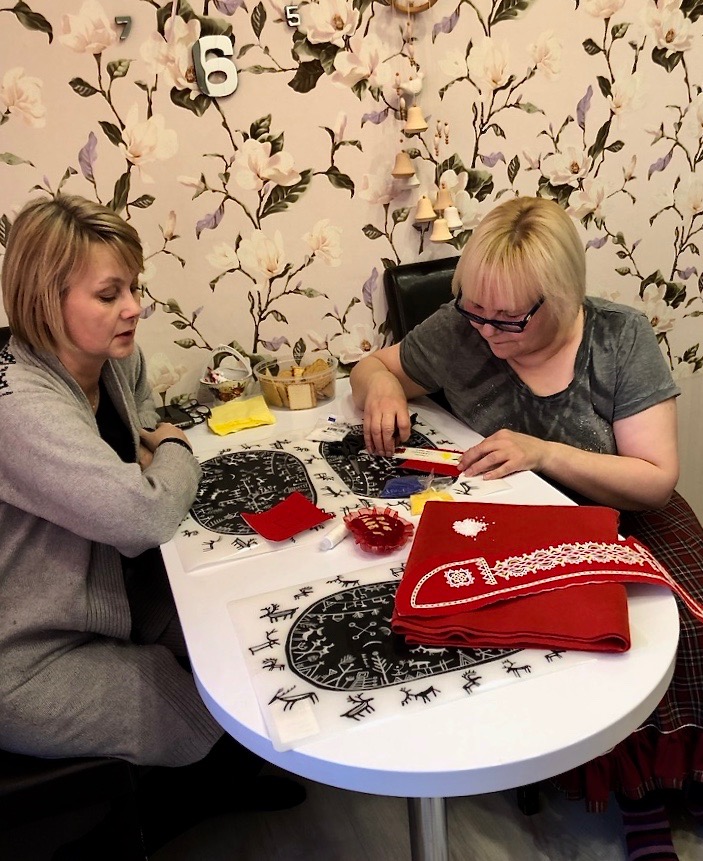
Duodji practitioner Zoja Galkina is a master of traditional East Sámi bead embroidery. At Zoja’s, we got to learn this technique in practice. The traditional Sámi colours of yellow, blue, and white beads are sewn onto a red base. Bead embroidery is in itself a time-consuming technique that requires accuracy – you thread beads onto a string and sew the string and beads onto the base with a stitch between each bead. By spending time on practical duodji practice, we gained closer acquaintance with and knowledge of duodji amongst the Sámi people on the Kola Peninsula. We had time to learn bead embroidery and discuss different duodji techniques and the use of beads in both traditional and contemporary contexts. Not least, it gave us the opportunity to learn about the ornamentation of the Kola Sámi, where the different ornaments have their own meaning. Through the composition of the ornaments, stories passed down through generations are told.
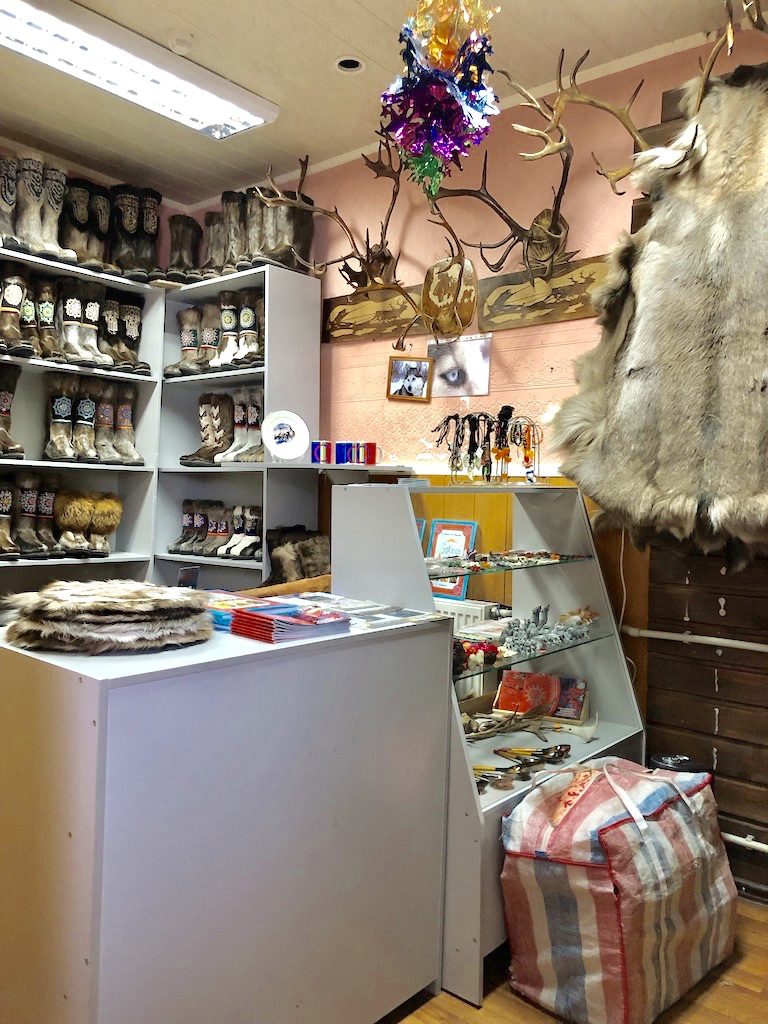
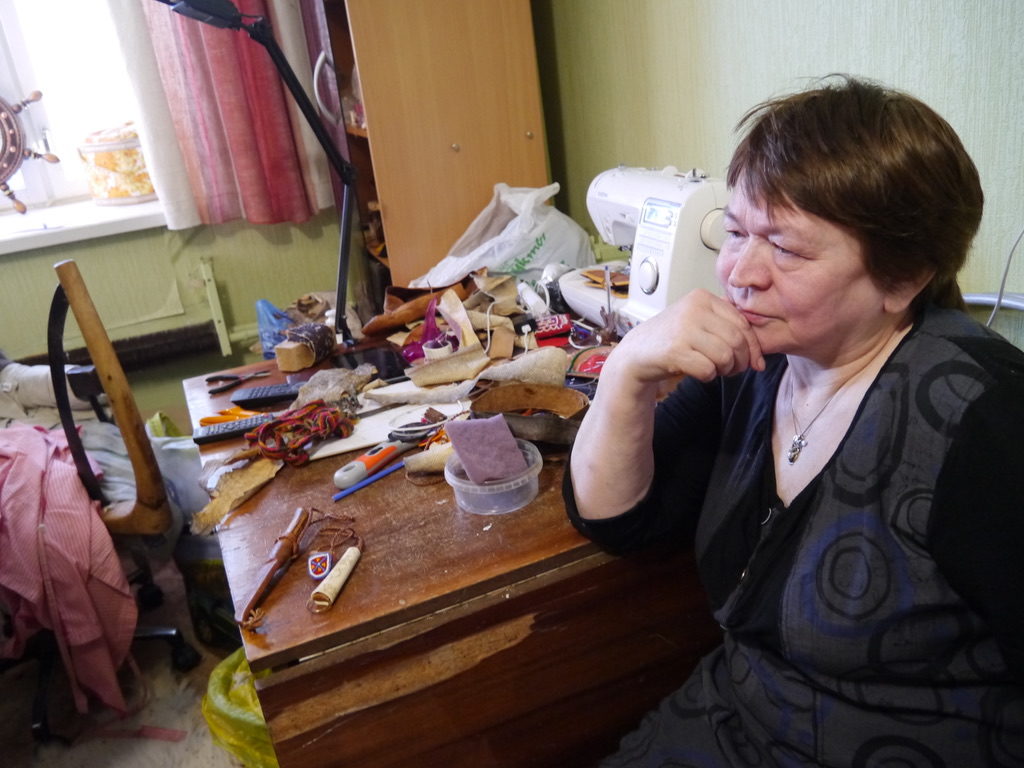
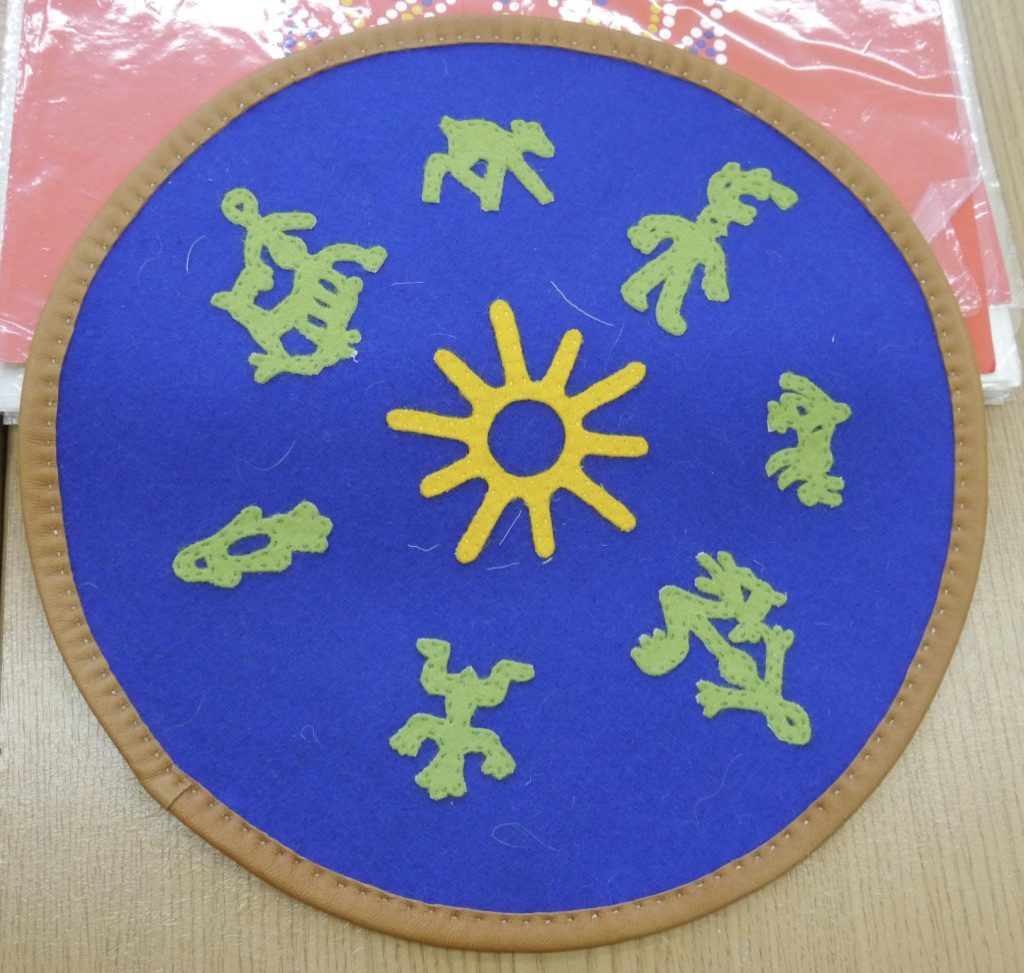
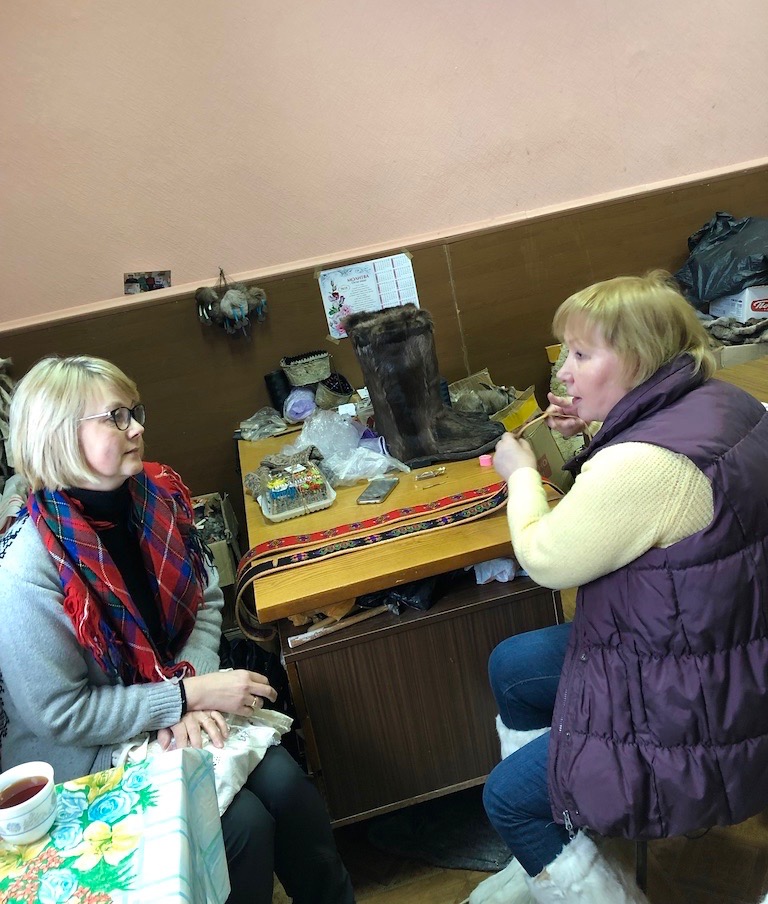
We visited Anna Galkina in her sewing room and a small shop she shared with two Komi women. Anna works a lot with leather, both reindeer and fish leather, and produces, among other things, traditional reindeer leather footwear. They have high shafts and many are decorated with bead embroidery. Bead embroidery techniques and ornamentation show ethnic affiliation. She taught us more about the significance of the different elements that make up the ornamentation patterns, such as houses, sun, birds, and girl and boy dances. Anna's mother created patterns based on the person she was sewing for; she thought about and spoke of the person while she sewed and designed borders and patterns.
Anna also tans hides herself, and the period April to September is spent on material collection and hide tanning, while the winter half-year is dedicated to sewing. Reindeer hide tanning is carried out in a manner very similar to that of the Sámi people in the Nordic countries, using willow bark. She also works with reindeer hide mosaic, where small pieces of reindeer hide in different colours are sewn together into fine patterns.
Duodji cooperation
One of the objectives of the trip was to explore opportunities for duodji collaboration with practitioners in Kola. Anna Galkina has collaborated with other duojars on the Finnish and Norwegian sides, and we discussed possibilities for cross-border cooperation, exchanging ideas and experiences about this. Jorunn brought squirrel fur work, and it was very interesting for us to hear that the use of squirrel fur was not unknown to the Sámi in Lujavre. Anna remembered that her mother and grandmother spoke about using squirrel fur and beads, but she has not seen it herself. The technique of decorating with squirrel fur and ornamental elements within this is a duodji area we wish to further develop cooperation around. The Sámi in Kola, like us, are working to further research their cultural background and duodji, and it was interesting to hear about their work and findings.
The visit to Valentina Sovkina, a dedicated cultural worker and Sámi politician, provided us with more information about, among other things, the use of crow silver. Valentina herself has not worked extensively with duodji, but has gained a lot of knowledge about it from Anastasia Mozolevskaia (1935-2015), a renowned duodji practitioner and enthusiast in the revitalisation of Sámi culture and duodji traditions on the Kola Peninsula. Mozolevskaia had mentioned that she remembered her mother and grandmother talking about the use of crow silver along with beads in the 1930s. They spoke of it being used in decoration on belts and around the collar/neck opening at the front of the gákti, but she had never seen it herself. Anastasia had seen crow silver in use during a visit to Sweden, and this brought back memories for her. She wanted to work on reintroducing the use of crow silver and finding out the techniques for how the crow silver was mounted in the decoration.
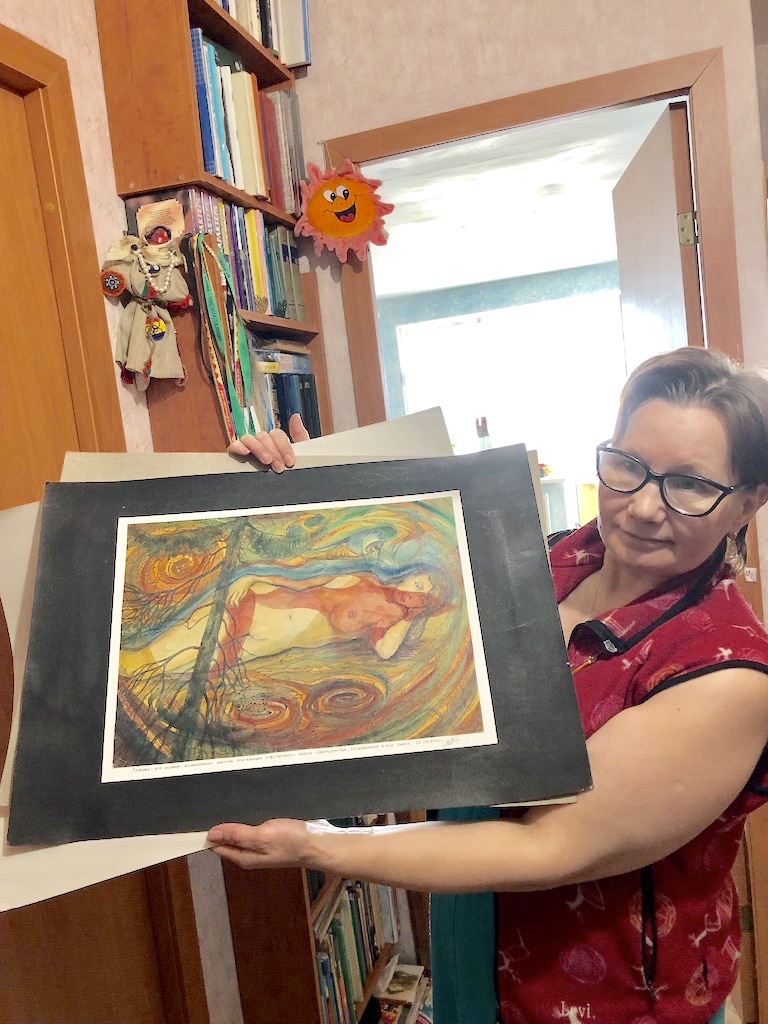
Valentina Sovkina works on several projects within politics, literature and art. She has a collection of visual art by Sámi artists from the Kola Peninsula and plans to open a gallery, Art Gallery Sápmi, where the art can be exhibited. Sámi visual art traditions and artists on the Russian side are a relatively unknown area for us and have received little attention on the Norwegian side. The art tells a great deal about societal changes and living conditions, and this is an area we wish to explore thematically and develop a project/collaboration around, including by looking at possibilities for creating encounters and exhibitions.
Shared history
We had an instructive and interesting visit to the Sami people on Kola. In addition to new acquaintances and knowledge, we see that the work of researching traditions, developing our culture and telling our own stories is the same throughout Sápmi. Despite different nation states and state systems that have contributed to the Sámi communities and cultures developing differently, and many cultural traits have disappeared, we have much in common that binds us together. In the field of duodji, we found commonalities in materiality, material processing, shapes, colours and ornamentation. No matter where you come from in Sápmi, you work with duodji in the same way, using materials based on what nature has to offer and maintaining your own traditional characteristics, while at the same time exchanging experiences and learning from each other is enriching. The sense of being a people is expressed through material, spiritual and social cultural elements, and immaterial cultural elements contribute to mutual understanding of Sámi art and cultural expression. Based on traditional Sámi ways of life and culture, it has always been important to expand co-operation between Sámi from all four nations.