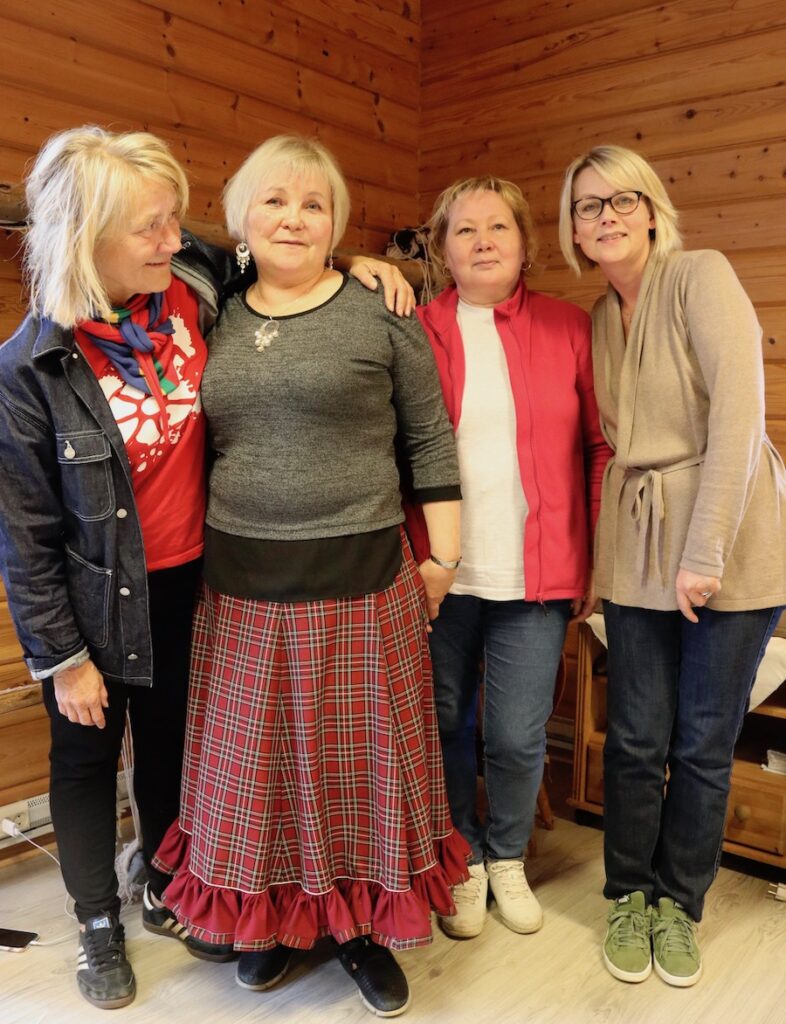
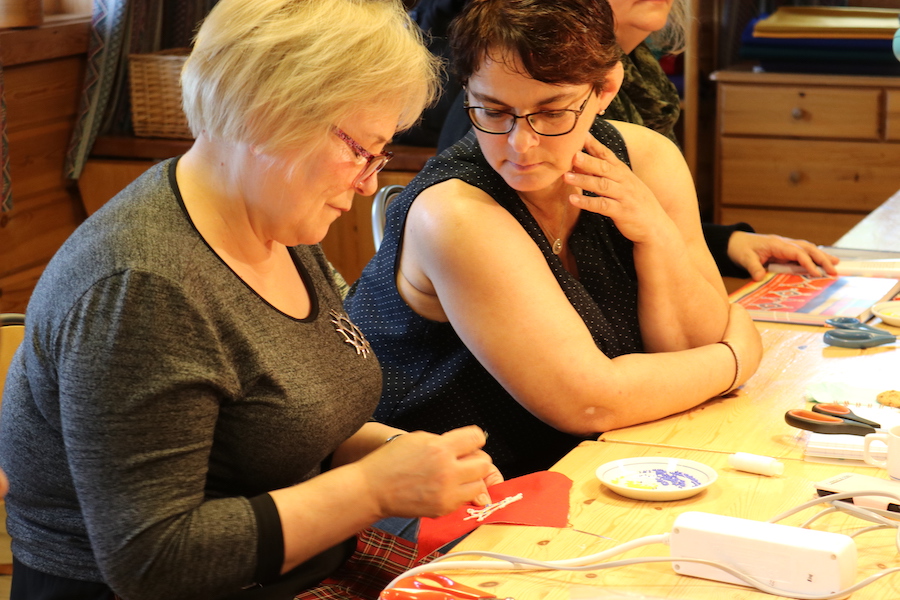

Zoja Galkina and Anna Galkina from The Lujavre / Lovozero Sámi know that mica has been used as decoration in their areas, but have never used it themselves. Now they wish to bring back this tradition. Last week, a group of duodji practitioners gathered in Manndalen to learn from each other.
Text: Torun Olsen
Duodji practitioner Zoja Galkina is a master of traditional Eastern Sámi bead embroidery, but has never worked with crow silver. Now she wants to learn the technique and revive a tradition that has disappeared from the Kola Peninsula. Neither Zoja nor Anna have seen crow silver in use, but they have heard from parents and grandparents that it was used, and they have also seen it in museums.
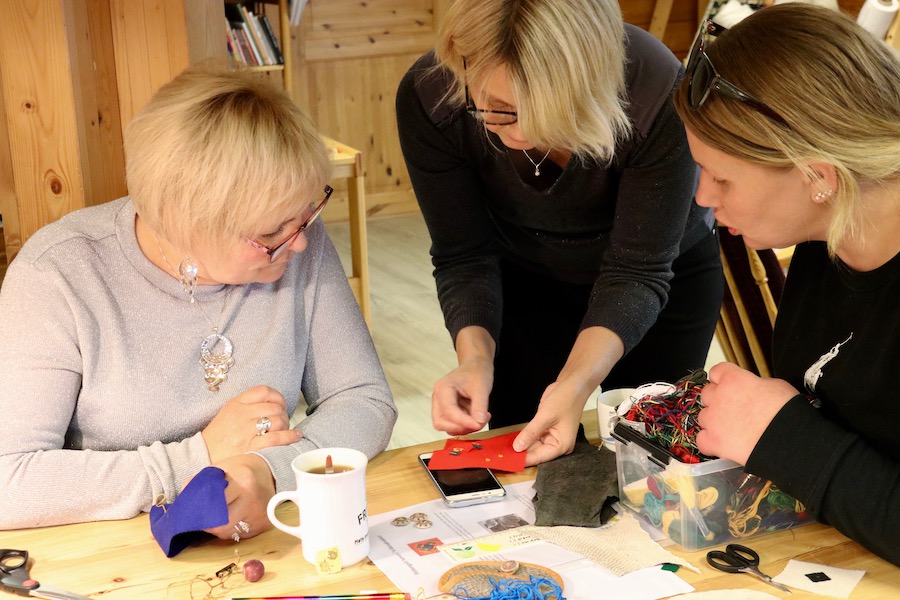
"I hope that we can bring it back again, because it's so beautiful. I want to learn the technique and use it in my products," says Zoja Galkina.
It is duojár Jorunn Løkvold who, in collaboration with the Norwegian Institute of Craftsmanship, has initiated these meetings through the project «Duodji Across Borders», with support from the Barents Secretariat. The aim is to achieve exchange, dissemination, and knowledge transfer between duodji practitioners.
In March, Løkvold visited Lovozero, both to find out if there had been a tradition of using crowberry there and to learn about their duodji traditions.
Løkvold says she has learned a lot about bead embroidery and its treatment and use of both reindeer and fish skin.
– It has been particularly interesting and exciting to gain insight into the ornamentation and its meaning. We use various ornaments, but it has been difficult to figure out why we use these specific ones. There are many similarities, and it's possible the meaning has been the same here, but it's hard to know, says Løkvold.
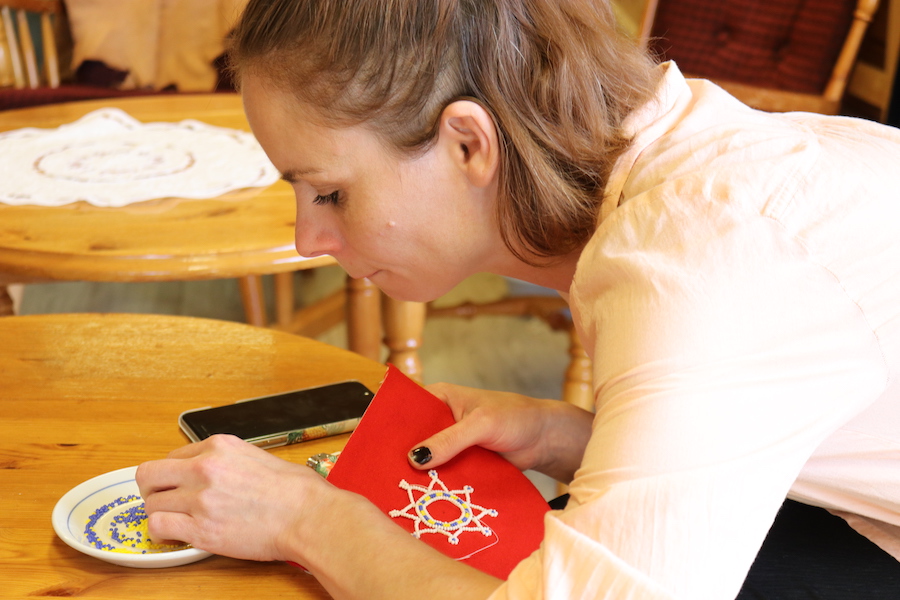
Despite different backgrounds and state systems that have contributed to the Sámi communities developing differently, there are many commonalities both in terms of the use and treatment of materials, shapes, and colours.
"I believe all Sámi have a connection to the different symbols, such as the sun and the drum. I also know that many artists and duodji practitioners copy a lot of what they have seen in Norway," says Zoja Galkina.
Galkina hopes this initiated duodji exchange will continue and can develop into something even bigger.
– I am so happy to have the opportunity to learn something new, exchange experiences and get to know other practitioners, says Galkina.